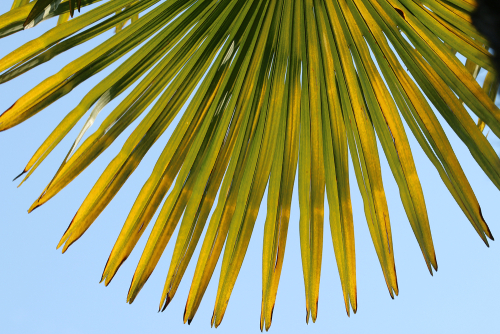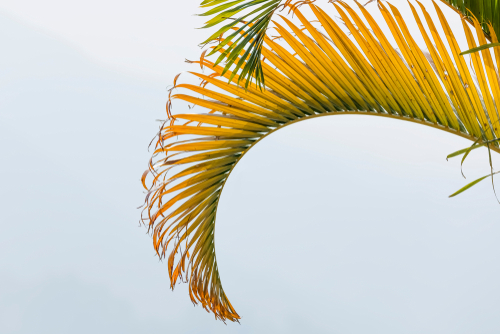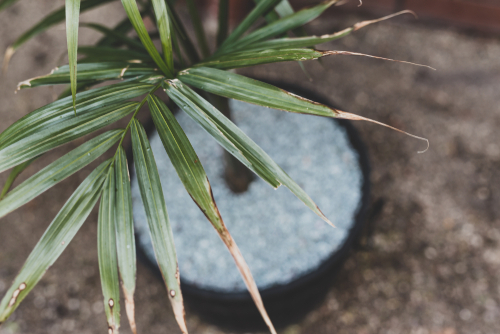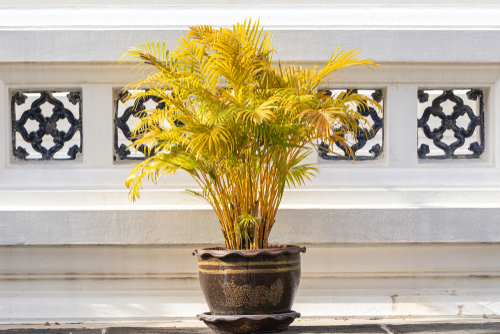
For the most part, indoor palms are pretty tough, low-maintenance roommates. But every now and then, you might notice a few fronds starting to turn yellow. Don’t panic! This is usually just your plant’s way of telling you something is off.
Why Your Palm Fronds Are Turning Yellow
It’s actually pretty rare for indoor palms to get hit by diseases. If you see leaves yellowing and dropping, it’s almost always a sign of a “care fail.”
Common culprits include:
- Overwatering
- Underwatering
- Bad lighting or winter storage issues
- Nutrient deficiencies
- Leaf chlorosis
Getting the Watering Just Right
Most indoor palms love moist soil, but they absolutely hate “wet feet” (standing water). On the flip side, you don’t want the root ball to dry out completely, because parched roots can’t send nutrients up to the rest of the plant.
The golden rule? Water whenever the top 1 to 2 inches of soil feels dry to the touch. In the heat of summer, you might be watering every couple of days. In the winter, you can back off quite a bit. When you do water, give it a good soak until water runs out of the drainage holes. Wait about ten minutes, then dump any excess water out of the saucer.
Location, Location, Location (and Winter Care)
If your palm is sitting in a spot that’s too cold or too dark, it’s going to be unhappy. Remember, these are tropical plants! They crave sun, warmth, and humidity. Without enough light, photosynthesis stalls out, and those lush green fronds turn yellow.
Your palm should get plenty of sun daily during the summer. In the winter, aim for at least 4 hours of direct light. A sunny south-facing window is perfect, but if your home is a bit dark, a grow light can work wonders. Keep the temperature above 60°F (15°C) and keep the air humid. I recommend misting your palm daily, or better yet, using a pebble tray or a small humidifier nearby.
Nutrient Deficiencies
Yellow leaves can also be a cry for food. When you first bring a palm home, it usually needs to be repotted into a larger container with fresh potting mix. Make sure to add a drainage layer at the bottom to prevent rot. After about two months, the nutrients in that fresh soil will be tapped out, and you’ll need to start fertilizing. Use a dedicated palm fertilizer and follow the label instructions closely—over-fertilizing can also cause yellowing!
Note: Give your plant a break and stop fertilizing during its winter dormant period.
Leaf Chlorosis
If you notice yellowing and you live in an area with hard water, you might be dealing with leaf chlorosis. This happens when there’s too much lime in your tap water. To fix this, switch to filtered water or—even better—rainwater. Adding a little iron fertilizer can also help get that vibrant green color back.