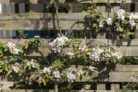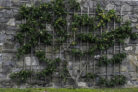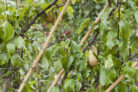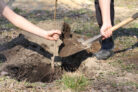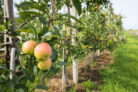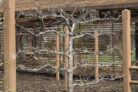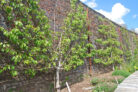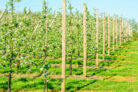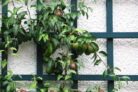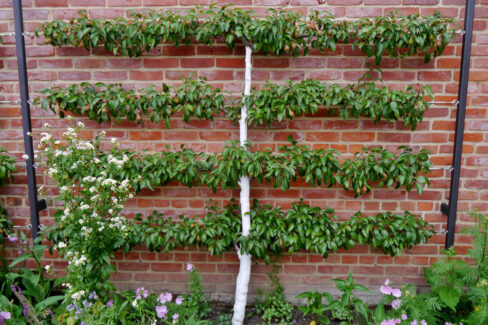
When you grow fruit on a trellis (also known as espalier), you’re training the branches to grow at 90-degree angles along a support system. It’s a fantastic way to save space, and these trees look absolutely stunning against a garden wall or a fence.
Trellised Fruit Needs a Support System
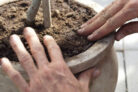
First things first: your espalier fruit tree is going to need a sturdy frame or trellis to lean on. When it comes to tying your tree to the support, I highly recommend using rubber ties. They’re great because they stretch as the tree grows. Just wrap the ties around the branches and trunk a few times, but make sure they aren’t too tight—you don’t want to choke the tree! The goal is to keep those branches growing perfectly horizontal. Most fruit trees are sun-worshippers, so pick a bright spot. Before you buy, do a little homework on what your specific variety needs regarding soil and sun. Once planted, create a “tree circle” about 3 feet (1 meter) wide around the base and keep it clear of grass and weeds so the tree doesn’t have to compete for nutrients.
Getting the Spacing Right
When you’re planning your garden layout, remember that espalier trees love to spread out horizontally. You’ll want to leave at least 6 to 7 feet (2 meters) between trees. If you’re going for a U-shape design, you can get away with planting them a bit closer together. It’s also a smart move to ask your local nursery about the “rootstock” the tree was grafted onto, as this determines how big the tree will eventually want to get.
The Best Time to Plant
If you’re buying bare-root trees, the best time to plant is in the fall. Planting in autumn gives the tree a head start on growing new roots before the spring rush. Pick a day that isn’t freezing, and try to plant in the late afternoon or evening so the roots don’t dry out in the sun. You can usually start planting around mid-October. If you bought your tree in a container, you can actually plant it year-round. However, for more sensitive varieties like kiwi, peaches, or figs, it’s better to wait until spring since they aren’t big fans of the winter chill.
Training Your Tree
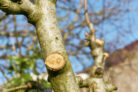
Training an espalier is a bit of an art form! In the first year, pick out three strong branches. Tie two of them down horizontally and let the middle one grow straight up. You can prune away any other stray branches. In the winter of the second year, you’ll need to head back (cut) that main vertical leader to encourage new side branches to sprout. It’s best to prune just above the spot where you want your next set of horizontal branches to start. During the summer, tie down the next two side shoots horizontally. Just keep repeating this process until your tree has reached the number of “tiers” you’re looking for!