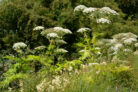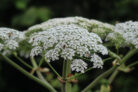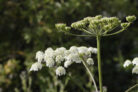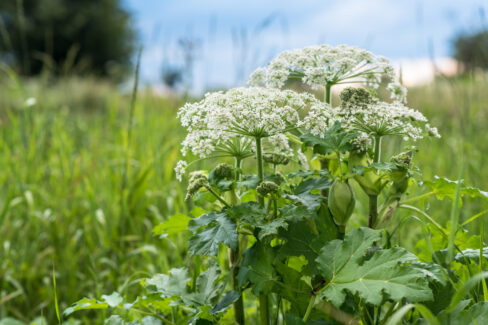
When we talk about Hogweed, it’s important to remember that we’re actually talking about a whole family of plants. Not all Hogweeds are created equal! To get the right answer on whether it’s safe or not, we first have to figure out exactly which variety you’re looking at. While they share a common lineage, the difference between them can be pretty extreme.
Common Hogweed is actually edible
Our native Common Hogweed (*Heracleum sphondylium*) is actually edible. In fact, wild food foragers often consider it a real aromatic delicacy! So, if you’re asking if this specific plant is dangerous, the answer is generally “no.” However, a word of caution: you should still avoid getting the sap directly on your skin, as it can cause allergic reactions in some people. It’s also best enjoyed in moderation. Young leaves are fantastic in salads or smoothies, and the buds, seeds, and roots are edible too.
Giant Hogweed is toxic
When people talk about “dangerous” Hogweed, they are referring to Giant Hogweed (*Heracleum mantegazzianum*). This plant isn’t native to our area, but it’s definitely making itself at home—and fast. It’s an invasive species that spreads rapidly, often crowding out our local plants. But the real reason to be wary of it is its toxicity. The sap contains chemicals that, when exposed to sunlight, cause incredibly painful second and third-degree skin burns.
Note:
While you aren’t legally required to report Giant Hogweed, if you spot it out in the wild, it’s a great idea to notify your local environmental office. This helps authorities remove it from sensitive areas like playgrounds before anyone gets hurt.
How to spot Giant Hogweed
If a wild plant pops up in your garden that looks a bit suspicious, it’s time to play detective. There are several look-alike plants that resemble a young Giant Hogweed, and most of them are harmless. However, it can also be confused with Poison Hemlock, which is even more toxic. Here is how you can identify Giant Hogweed:
- Height: It can grow up to 10 feet tall (sometimes even higher!).
- Stem: Hollow, slightly furrowed, and covered in distinct reddish-purple splotches.
- Leaves: Divided into 3 to 5 segments, usually between 4 and 12 inches long.
- Blooming Season: It only flowers in June and July (Common Hogweed blooms through September).
- Flowers: Huge, umbrella-shaped white to pale pink clusters that can reach up to 20 inches across.
Getting rid of dangerous Hogweed safely
If you find Giant Hogweed on your property, you’ll want to tackle it as soon as possible. The best time is March or April, before it has a chance to flower and drop seeds. Removing it is hard work because it has to be done by hand. First, cut back the parts above ground, then dig out the roots at least 6 inches deep. If possible, the remains should be burned or disposed of in your regular household trash (don’t compost it!).
Because the sap is so dangerous, anyone helping out needs to suit up. We’re talking long, thick clothing, heavy-duty gloves, sturdy boots, a face mask, and safety goggles with side shields.
Check the area again about three weeks later for any new growth. You’ll also want to keep an eye on that spot every spring for the next five years just to be safe.
Pro Tip:
Always choose a cloudy, overcast day to remove the plant. If you do accidentally get some sap on your skin, the reaction won’t be nearly as severe as it would be on a bright, sunny day.