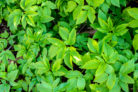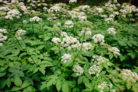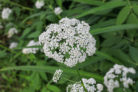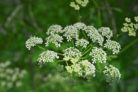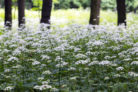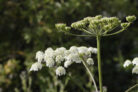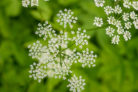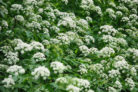
Never head out on a forage for ground elder (also known as Giersch) without doing your homework first! When it comes to wild greens, mistaking one plant for another can be risky—and in some cases, even fatal. To make sure you’re picking the right stuff for your kitchen and not a dangerous lookalike, keep these tips in mind:
The Dangerous Lookalikes: Fool’s Parsley and Poison Hemlock
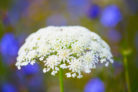
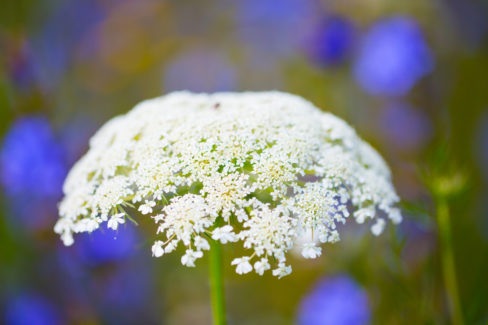
Ground elder has quite a few doppelgängers out there. The good news? Only two of its close relatives are actually toxic. However, you should never rely on the flowers alone to identify this healthy wild herb. Many plants in the carrot family (Apiaceae) have nearly identical white umbrella-shaped flower clusters (umbels).
Mistaking ground elder for Fool’s Parsley or Poison Hemlock can have serious consequences. Luckily, Poison Hemlock gives itself away with distinct reddish-purple spots on its stem. As for Fool’s Parsley, take a close look at the leaves: they are much more finely divided and feathery than ground elder leaves, with deep notches along the edges.
By the way: Giant Hogweed is another one to watch out for. While it looks similar, its leaves are much more jagged and lobed compared to the rounded leaves of ground elder—and you definitely want to avoid touching it, as it can cause nasty skin burns.
The Safe Neighbors: Similar Plants That Aren’t Toxic
Ground elder also has some cousins that are perfectly safe to be around. Burnet-saxifrage, Wild Angelica, Wild Carrot (Queen Anne’s Lace), and Greater Water-parsnip all look strikingly similar to ground elder but aren’t poisonous.
Just a heads-up: While Greater Water-parsnip isn’t “toxic,” eating it can sometimes cause a bit of an upset stomach or mild diarrhea, so it’s still best to know exactly what’s going into your salad bowl!
Ground Elder vs. Young Elderberry
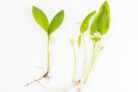
Believe it or not, young ground elder plants can look a lot like baby Elderberry shrubs. When they first sprout, their leaf structures are remarkably similar. The easiest way to tell them apart is to look at the stem: Elderberry stems are round, while ground elder has a very distinct triangular, hollow stalk. If you aren’t sure, just snip the stem and check the cross-section.
Pro tip: Give the leaves a little rub between your fingers. If it’s ground elder, you’ll notice a pleasant, fresh scent that reminds you of a mix between carrots and parsley.