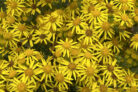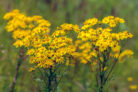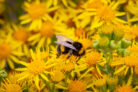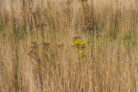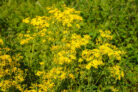
Tansy Ragwort (often called St. James’ Wort) is a member of the aster family, and as the name suggests, it’s a plant you definitely want to keep at arm’s length. Every single part of this plant is toxic, so being able to spot it in the wild or in your pasture is a must-have skill for any gardener or livestock owner. This yellow-flowering weed loves higher elevations and spreads like wildfire if left unchecked.
Key Characteristics of Tansy Ragwort
Tansy Ragwort goes by many names—Stinking Willie, Ragweed (though it’s different from common ragweed), or Mare’s Fart—and you’ll recognize it primarily by its bright yellow blooms. However, to distinguish it from other harmless yellow wildflowers on the range, you need to look at the finer details. Remember: this plant is poisonous to both humans and animals. Here are the main ID markers:
- Member of the Aster/Daisy family
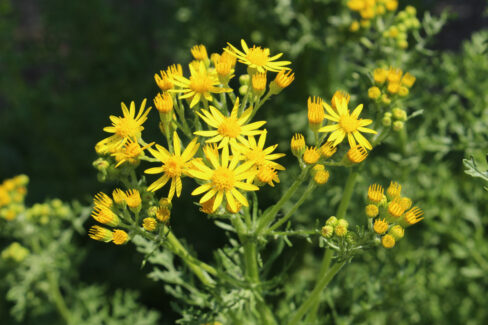
- Vibrant yellow flower heads
- Thrives on fallow land and elevations above 3,000 feet
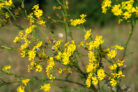
- Grows between 1 and 4 feet tall
- Stems are angular, furrowed, sturdy, and often covered in cobweb-like hairs
- Alternating, deeply lobed (pinnatifid) leaves
- Basal leaves wither away once the plant starts blooming
- Crushed leaves have an unpleasant, even revolting smell
- Flower heads sit upright in flat-topped clusters (corymbs)
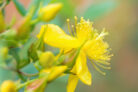
- Flowers are about 1/2 to 3/4 of an inch wide
- Usually 13 ray florets (petals) surrounding a disc-shaped center
- The bud casing consists of 13 black-tipped bracts
- Two outer bracts sit tightly against the base
The name “Ragwort” or “Groundsel” (from the genus *Senecio*) actually comes from the Latin word *senex*, meaning “old man.” This refers to the fluffy white seed heads that look a lot like dandelion fluff, which start forming even while the plant is still flowering.
Identifying Tansy Ragwort in Detail
The most obvious giveaway is the cluster of brilliant yellow flowers. Tansy Ragwort is a composite flower, meaning its heads grow in upright clusters that look a bit like daisies. If you take a closer look at a single bloom, you’ll typically count 13 yellow “petals” (ray florets) circling the center. Look at the green casing underneath the flower; you’ll see 13 bracts tipped with distinct black points, plus two smaller bracts hugging the base.
The plant usually reaches about 3 feet in height, though it can stretch up to 4 feet in ideal conditions. In its first year, you’ll only see a “basal rosette”—a cluster of leaves on the ground about 8 inches long. It’s not until the second year that the plant sends up its tall, bushy stalks.
You can also identify it by its sturdy, grooved stems, which often have a purple or reddish-brown tint. These stems are sometimes fuzzy, looking like they’ve been draped in tiny spiderwebs. The leaves are deeply divided and ruffled, arranged alternately along the stem. If you flip a leaf over, you’ll often find that same cobweb-like down on the underside.
If you’re still not sure, let your nose be the judge. If you rub a leaf between your fingers, it releases a pungent, “stinking” odor that you won’t soon forget. You’ll mostly find it in dry, loamy, or clay-heavy soils, often popping up in pastures, along roadsides, or near railway embankments.
Special Features of Tansy Ragwort
The blooming season for Tansy Ragwort runs from June to August—right when most other pasture plants are in full swing. This is particularly dangerous for livestock and foragers who might not recognize it as a toxin. If you try to pull it up, you’ll notice a very strong, deep taproot with many fine fibrous offshoots, making it quite a challenge to remove completely.
Interestingly, while it’s toxic to most, it’s the primary food source for the Cinnabar moth caterpillar. These orange-and-black striped crawlers actually thrive on the plant in the spring and aren’t affected by the poison at all.
One of the Most Dangerous Toxic Plants
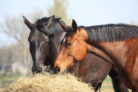
Every part of the Tansy Ragwort contains pyrrolizidine alkaloids like senecionine and jacobine. Young plants and the flowers are the most dangerous because they contain the highest concentration of these toxins. What’s even scarier is that the poison doesn’t disappear when the plant dries out—it remains just as toxic when mixed into hay, where animals are even more likely to eat it by mistake.