Many gardeners—especially those who’ve just taken over an older backyard or a community garden plot—find themselves staring up at their trees wondering, “What kind of apple is this, anyway?” If you’ve tried to figure it out yourself and keep hitting a wall, don’t worry. You can always call in a pomologist. These are the true apple experts who specialize in identifying fruit varieties, especially those wonderful old heirloom types.
What do apple tree leaves look like?
If you want to start with the basics, take a look at the foliage. An apple leaf is generally oval-shaped and a deep, dark green. If you look closely at the base of the leaf where it meets the stem, it’s usually asymmetrical. The edges of the leaves typically curve upward slightly and have tiny, serrated teeth along the margin.
Using the fruit to ID the variety
The biggest clue to your tree’s identity is, of course, the fruit itself. This is usually the easiest way to narrow down exactly what you’re growing.
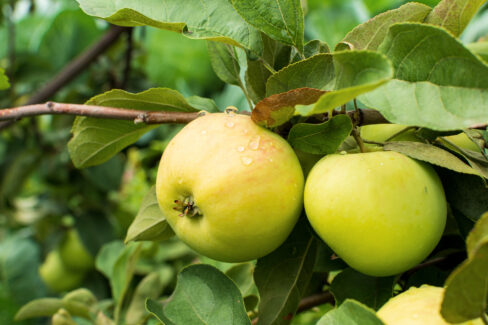
Apples come in an incredible range of characteristics. They vary wildly in color, size, shape, and weight. The skin might be a solid color, or it could feature beautiful patterns, stripes, or “blushes” in various shades of red, green, or yellow.
Timing the harvest
When your apples actually ripen tells you a lot about the variety. Some “summer apples” are ready to pick as early as late August, while others aren’t ready until mid-autumn. Then you have “winter apples,” which actually need to sit in storage for 1 to 2 months after harvesting before they reach their peak flavor.
When in doubt, ask the pros
Because there have been so many different crosses and hybrids over the years, there are thousands of apple varieties out there. Even the pros can’t always give you a 100% certain ID every single time, but a pomologist is still your best bet. Many experts offer identification services online. You can often send them high-quality photos, or in many cases, you can actually mail them a few physical samples of your apples to inspect. If you do mail them in, just make sure to include the stems—they’re an important part of the ID process!