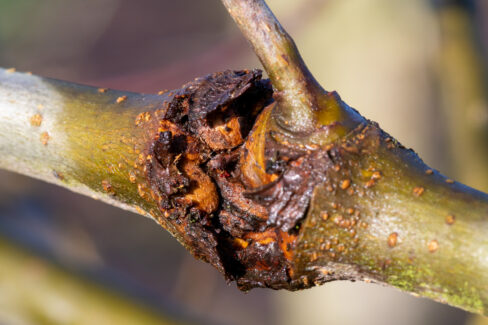
Apple trees are usually pretty low-maintenance and reward you with a massive harvest in the fall—enough to keep you snacking all winter long! Honestly, just one or two trees in your backyard are plenty to keep your pantry stocked. But every now and then, fungal diseases can crash the party and seriously put a dent in your harvest.
Why is fungus attacking my apple tree?
There are a few different reasons why your apple tree might be dealing with a fungal infection. Any kind of “injury” to the bark, fruit, or wood can act as an open door for fungal spores to settle in. Your tree is also vulnerable during leaf drop, heavy frosts, blooming season, or even right after pruning, as these all create open spots on the plant. And don’t forget about moisture! If you don’t prune your apple tree regularly, the branches and leaves get too crowded. This stops air from circulating, meaning the leaves stay wet way too long after it rains—creating the perfect breeding ground for fungi.
Fungal diseases every gardener should know
The list of fruit tree diseases is pretty long, but if you can spot the most common ones, you’ll have a much easier time fighting back.
Apple Canker
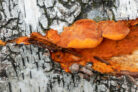
If you live in a rainy area, you’ve probably run into apple canker. This fungus loves apple and pear trees and spreads through the bark and wood. Look for reddish-brown spots, cracked bark, withered twigs, and weird, swollen growths (calluses). To fix it, you’ll need to cut away the infected parts and seal any large wounds with a pruning sealer. Make sure to dispose of the old branches carefully so you don’t accidentally reinfect the tree!
Apple Scab
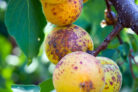
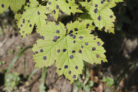
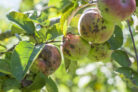
Apple scab doesn’t just stick to apples; it also goes after cherries, peaches, and pears. You’ll know you have it if you see brownish-black spots on the leaves and star-shaped cracks on the fruit itself. Plus, the tree will start dropping its leaves early. If you spot these signs, get rid of the infected leaves and fruit as fast as possible.
Powdery Mildew vs. Downy Mildew
One of the most common headaches for apple growers is powdery mildew. Depending on the variety of apple you have and the weather, it can show up quite often.
The fungus hitches a ride through the winter inside the leaf and flower buds, especially at the tips of the shoots. As soon as those buds open in the spring, the fungus starts spreading across the young leaves. With a little help from the wind and local insects, the spores can take over the whole tree in no time. It’s especially aggressive on young leaves between late May and early July.
How to tell them apart
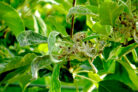
Not all mildew is created equal! We distinguish between “powdery” (true) mildew and “downy” (false) mildew. You can identify powdery mildew because, at the start, that white coating can be easily wiped off with your finger. Also, it usually only shows up on the top of the leaf. Downy mildew, on the other hand, appears on the underside of the leaf too and won’t just wipe away.