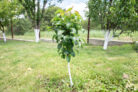
Trees are some of the most precious parts of our ecosystem, so we should always think twice before deciding to take one down. While taking down the canopy is usually the quick part, dealing with the root system is where the real work begins.
Know the Rules Before You Cut
In many places, local ordinances protect certain types of trees, and there are often specific regulations regarding when and how you can remove them. While fruit trees in your own backyard are generally fair game year-round, it’s always a smart move to check with your local municipality or HOA first. You don’t want to end up with a surprise fine just because you wanted to clear some space!
Did you know…?
You might hear rumors about “blackout dates” for tree cutting (often to protect nesting birds), but these rules usually apply to public lands or large-scale clearing rather than a standard residential garden. Still, it’s always kind to double-check for any feathered friends living in the branches before you start.
Why Say Goodbye to an Apple Tree?
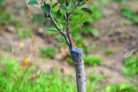
Most of us wouldn’t dream of cutting down a healthy, productive apple tree without a really good reason. Usually, diseases are the culprit—specifically nasty invaders like Honey Fungus. This particular fungus is a real wood-rotter and can spread through the soil to your other plants. In cases like this, removing the entire tree, stump and all, is often the only way to save the rest of your garden. Other times, a tree might just be past its prime. If even a heavy rejuvenation prune doesn’t bring back the fruit, it might be time to make room for something new.
Removing the Apple Tree and the Root Stock
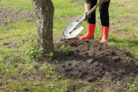
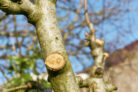
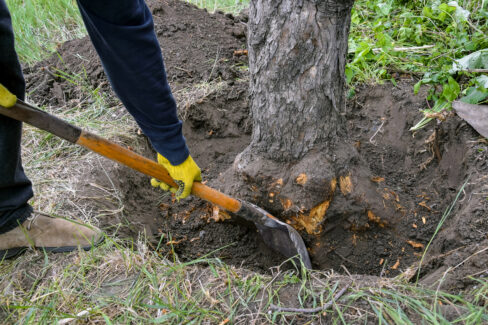
Even though apple trees are technically shallow-rooted, getting that stump out is no walk in the park. Leaving a stump behind creates a major tripping hazard, and waiting for nature to rot it away can take 8 to 10 years! If you’re planning on planting a new tree in the same spot, you’re going to have to roll up your sleeves and dig it out. Pro tip: Leave about 3 or 4 feet of the trunk standing. It looks a bit odd at first, but it gives you a massive amount of leverage to wiggle the root ball loose later on.
Use Your Chainsaw Wisely
Once you’ve cleared away the top layer of soil, you can use a chainsaw to cut through the main lateral roots. Just a heads-up: make sure to spray the dirt off the roots with a hose first. Dirt and rocks will dull a chainsaw blade faster than almost anything else!