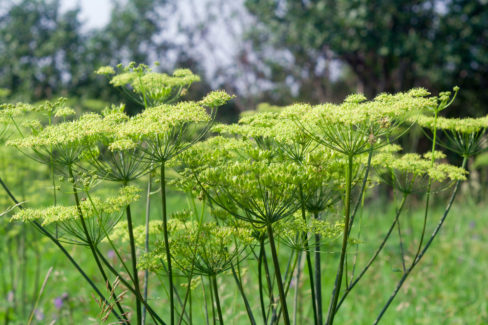
Angelica (or *Engelwurz* as we call it in the herb world) is a classic member of the umbellifer family that’s been a staple in herbal medicine for centuries. But here’s the thing: if you’re planning on foraging for it, you’ve got to be incredibly careful. It looks strikingly similar to Poison Hemlock and Giant Hogweed, both of which are highly toxic. Unless you’re 100% sure of your plant ID skills, you’ll want to proceed with caution!
- Spotting Angelica in the Wild
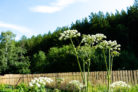
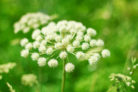
Garden Angelica (*Angelica archangelica*) is an impressive, clump-forming perennial that can tower up to 10 feet high. It loves soaking up the sun in nutrient-rich soil. From June to August, it shows off large, greenish-white umbrella-like flower clusters (umbels). Its leaves are lance-shaped with serrated edges. While gardeners love it as a pollinator magnet for bees, it’s most famous as a medicinal plant. One of the best ways to identify it is the plant’s distinct scent. It has a spicy, pleasant aroma that smells a lot like herbal bitters. In fact, the roots are used to make digestive liqueurs. You might recognize its flavor in famous spirits like:
- Klosterfrau Melissengeist
- Boonekamp
- Chartreuse
- Cointreau
- What’s Inside?
The secret to that signature scent lies in its essential oils (specifically macrocyclic lactones). But that’s not all that’s packed into this plant; it also contains:
- Bitter compounds
- Coumarin derivatives
- Furanocoumarins
- Coumarin
- Resin
- Sugars
A quick heads-up: those furanocoumarins can make your skin extra sensitive to the sun. If you get the sap on you and then spend time in the daylight, it can cause nasty skin irritation, allergic reactions, or even blistering.
- Telling the Difference: Angelica vs. Hemlock vs. Hogweed
To keep yourself safe, you really need to know the “lookalikes.” Honestly, the safest bet is to grow your own or buy it from a reputable source rather than picking it in the wild. Here’s the breakdown:
Angelica
It grows up to 10 feet tall with a turnip-shaped root, a grooved, hollow stem, and long-petioled, pinnate leaves. The flower heads are usually hemispherical and a pale greenish-white. The “smoking gun” for identification is that sweet, pleasant, herbal liqueur smell.
Water Hemlock
This plant is extremely poisonous and usually tops out around 5 feet. The stem is hollow and grooved, but look closely at the bottom—it’s often spotted with red. The leaves are multi-pinnate, dark green on top and grayish-green underneath. While the flowers are white and umbrella-shaped, the smell is a dead giveaway: it’s unpleasant and smells a bit like mouse urine. Yuck!
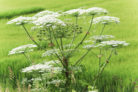
Giant Hogweed
This one is a beast, reaching up to 10 feet tall with a thick taproot. It has hairy stems with dark to purple splotches. The flower heads are massive—sometimes reaching a foot and a half across! The flowers themselves range from white to a soft pink.