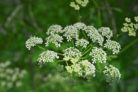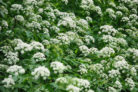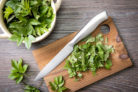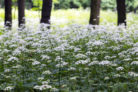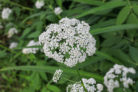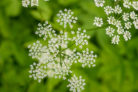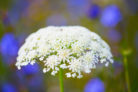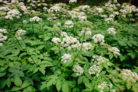
Most gardeners know ground elder (Giersch) as that stubborn weed that just won’t quit. But if you talk to herbalists or foragers, they’ll tell you a different story. This plant is actually a hidden gem in the kitchen and the medicine cabinet, often earning the nickname “wild parsley.” If you’re curious about what these leaves look like and how to use them, you’ve come to the right place!
Ground Elder Leaves: How to Spot Them
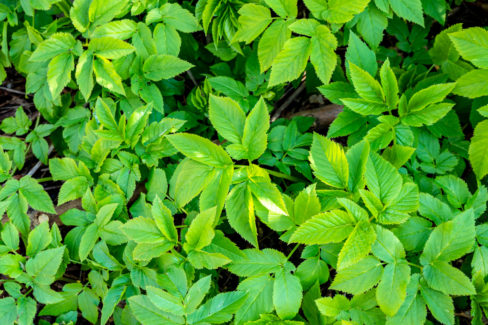
The leaves of ground elder grow both along the smooth stems and right at the base of the plant. They range from a standard green to a slightly bluish-green, and honestly, they can look pretty unremarkable when they’re blending in with other garden greenery. However, once you know what to look for, the foliage is actually quite distinct.
The giveaway is the way the leaves are arranged—they grow alternately along the stem. Each leaf is divided into a leaf blade and a petiole (the leaf stalk). While the stalks can grow up to 8 inches long, the blades follow a “rule of threes.” They are divided into leaflets that are themselves often split into three parts.
If you take a closer look at these leaflets, here is what you’ll notice:
- An elongated, egg-like shape
- Pointed tips
- Sharply serrated (toothed) edges
- A fuzzy or hairy underside
- A smooth, hairless top surface
Ground Elder Leaves: Cooking with “Weeds”
You don’t have to be a hardcore wild-herb enthusiast to appreciate ground elder once you’ve tasted it. This fast-growing plant isn’t just edible; it’s incredibly healthy. Packed with Vitamin C and iron, it’s a powerhouse ingredient whether you’re brewing it into a tea, infusing it in oil, or using it as a fresh herb.
Pro Tip: If you rub the leaves between your fingers, they should release a wonderful aroma. The stronger the scent, the better the flavor! Most people describe the taste as a fresh, slightly spicy mix of carrots and parsley.
Edible Leaves: Young vs. Old Foliage
For the best flavor, you’ll want to harvest the leaves before the plant starts to flower. If you catch them early in the spring (March to early April) when they’ve just sprouted, they are tender and aromatic. These young leaves are perfect for making ground elder spinach, tossing into salads, blending into smoothies, or steeping for a fresh herbal tea.
As the leaves get older and larger during the summer, they can get a bit tough. At this stage, they are best used dried. Dried ground elder is a fantastic way to add depth to soups, stews, and veggie dishes. You can even use the dried foliage as a savory seasoning for roasted potatoes or meat dishes.