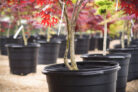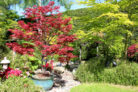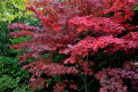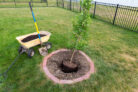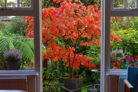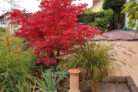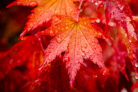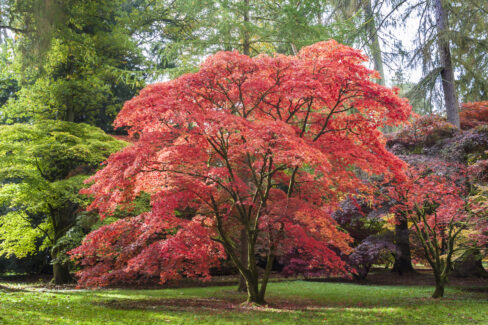
Japanese Maples, especially the stunning red varieties, are a favorite for gardeners and park designers all over the world. When you find that “just right” spot for one, its delicate, vibrant foliage will easily become the showstopper of your entire yard. Here’s everything you need to know to get it right.
Japanese Maples Love the Sunlight
The Japanese Maple originally hails from the mountain regions of Japan. Because of those high-altitude roots, these trees are actually quite cold-hardy. Generally speaking, they thrive in spots that get full sun to partial shade, but the right lighting is about more than just healthy growth.
If you want those iconic, fiery colors, your tree needs plenty of sunlight. The exact amount of light required can vary depending on the specific variety, but red Japanese Maples are particularly sun-hungry. To get that breathtaking color payoff, you’ve got to make sure those leaves are getting enough rays.
Even if you’re growing a Japanese Maple as a tiny bonsai, that sun rule still applies! Make sure your little tree has a sunny spot on the balcony or a bright corner where it can soak up the sun for a good portion of the day.
The Best Soil for Your Tree
While sunlight is key, the ground beneath the tree is just as important. The biggest rule of thumb? Use well-draining soil. You want to make sure water can move freely through the substrate so it doesn’t pool around the roots. Japanese Maples hate “wet feet” (standing water), which can lead to serious root issues.
Here’s what to look for in a planting site:
- Loose, moderately moist soil.
- Nutrient-rich dirt with plenty of organic matter (humus).
- Enough depth for the tree’s long taproots to stretch out.
Make sure the soil is packed with enough nutrients to support that lush canopy of leaves. A good mix should contain some sand or loam and be enriched with compost or humus. These trees aren’t too picky about pH—they do great in anything from neutral to slightly acidic soil. Pro tip: If your garden soil feels too compact or heavy, be sure to loosen it up well before you start planting.