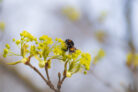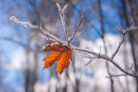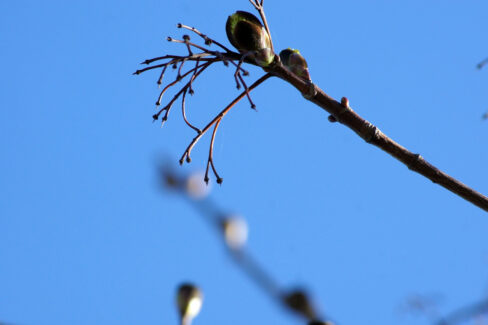
For our maples, winter can’t end soon enough. As soon as those first few sunny spring days hit, they start pushing out beautiful new growth. But then, out of nowhere, everything comes to a screeching halt. Even worse, those fresh branch tips start drooping and drying up. You might be wondering: what invisible force is attacking my tree?
Why is my new maple growth wilting?
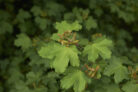
This usually happens right in the heart of spring when the maple is waking up. That fresh, vibrant growth wilts almost overnight. When you see a change that sudden and dramatic, there’s usually one culprit behind it: frost! Even though maples are generally hardy trees, their brand-new shoots are incredibly delicate and sensitive to the cold. Even if the days feel warm and spring-like, late-season frosts can sneak in at night. It only takes a few hours of freezing temperatures for those tender shoots to lose their vitality completely.
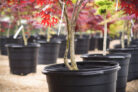
Norway Maples and Japanese Maples (especially the lacy varieties) are particularly at risk. This is especially true if your tree’s location is in a low-lying spot or a flat area. Frost tends to settle in these “frost pockets,” creating pools of icy air that linger well into mid-May.
Quick Note:
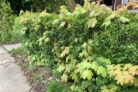
If you notice the wilting is only happening in certain spots rather than across the whole tree, you might be dealing with the dreaded Verticillium wilt. You’ll want to look into this immediately because it’s highly contagious. Unfortunately, if it is Verticillium, you’ll likely have to remove the tree to save the rest of your garden.
What to do after frost damage
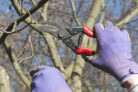
The good news? Frost damage is rarely a death sentence for a maple, unless it’s a very young tree you just planted. However, you shouldn’t just ignore it. Those damaged tips act like an open door for diseases and pests. Your best bet is to prune the frozen tips back until you hit healthy wood. Then, be patient! By June, the tree should start pushing out new growth on its own. Just make sure to keep an eye on the forecast and protect the tree if another freeze is predicted.
Pro Tip:
Not sure where the frost damage ends and the healthy wood begins? Try the “scratch test.” Carefully scrape away a tiny bit of bark just below the frozen buds. If you see green underneath, the wood is healthy and alive. If it’s brown, that part of the branch is toast.
How to protect your maple from frost
While hardy maples get tougher as they age, they can always use a little help during those tricky spring nights. Here’s how you can give them a boost:
- Give your maple some potassium in the fall.
- Fertilize with something like potash or a comfrey tea.
- This strengthens the cell walls and actually lowers the freezing point of the water inside the cells (think of it like natural antifreeze!).
- If a frost warning pops up, cover the crown of the tree.
- A frost blanket or a breathable fleece cover works perfectly for this.