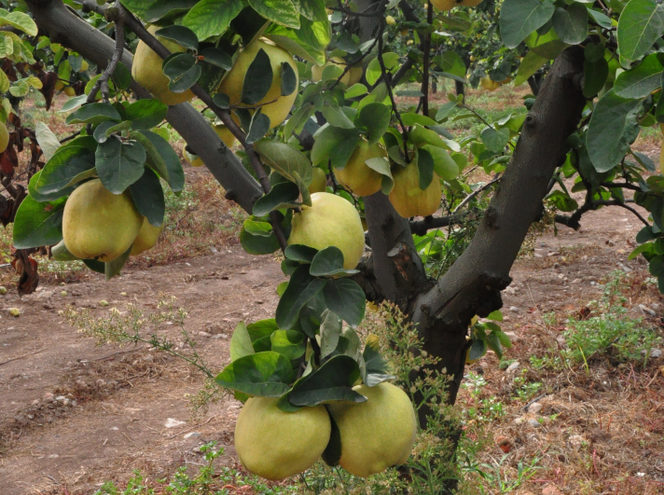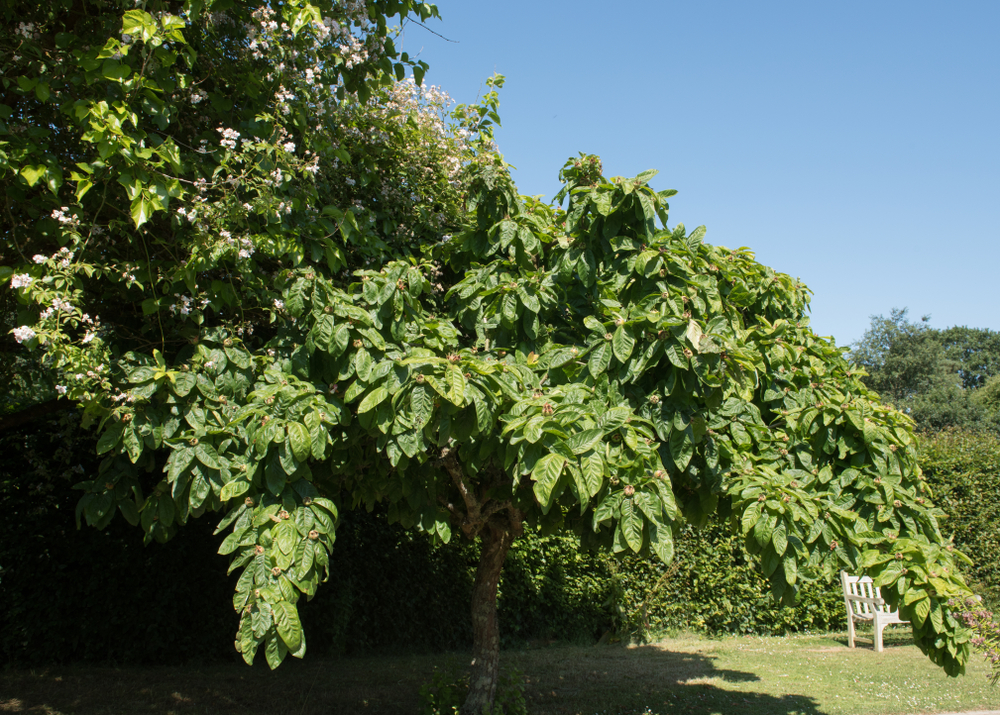
With a little bit of skill and a whole lot of patience, you can train a Common Medlar into a “standard”—or what we gardeners call a high-stem tree. Not only does this look super elegant, but it’s also a total space-saver compared to a bushy shrub, making it a perfect fit for smaller backyard gardens.
What exactly is a “Standard” tree?
You don’t see Medlar standards in home gardens very often, which is why buying one that’s already been trained can be pretty pricey. Simply put, a “standard” is just a plant trained to grow like a tree, featuring one thick main trunk and a wide, leafy canopy.
You can actually train plants that naturally grow as multi-stemmed shrubs into this form. Many fruit bushes work great for this, and the Medlar is no exception. “Training” a plant just means consistently pruning it into your desired shape until you’ve successfully established that single trunk and crown.
How to train your Medlar into a tree
First, pick out a strong, straight, centrally located branch on your Medlar. This is going to be your main trunk. Your first job is to clear away any “competitor” shoots growing from the base of the plant. Then, trim back the side branches until you’re left with just the growth at the top where you want your canopy to be. If the main stem feels a bit wobbly, go ahead and secure it to a stake for support.
From here on out, you’ll need to keep a close eye on your Medlar and keep those pruning shears handy. Be diligent about cutting off any new shoots that pop up from the base; if you let them go, your Medlar will try to revert right back into a shrub. You should also remove any side shoots that sprout along the trunk below your designated crown height.
Eventually, you’ll also need to do some thinning inside the canopy to keep it growing thick and healthy. The best time for this is early spring. Here are a few pro-tips to keep in mind when pruning your Medlar:
- Try to prune on a dry, slightly overcast day.
- In addition to shaping the tree, always remove any dead or sickly-looking branches.
- Keep an eye out for fruiting wood—try to leave these alone or only trim them back as much as absolutely necessary.
- To prevent spreading diseases or inviting pests, always make sure your pruning tools are sharp and disinfected.