Pests love mint just as much as we do, and there’s nothing worse than going to pick a few leaves for your mojito only to find them ruined. That’s why it’s so important to keep an eye out and catch these uninvited guests early. To help you out, I’ve put together a quick guide on the usual suspects and how to handle them naturally.
Aphids
Unless you’re totally ignoring your herb garden, you’ll probably spot aphids pretty quickly. These tiny sap-suckers are a classic garden nuisance. They can be green, black, or even translucent, ranging from tiny specks to about 3/4 of an inch long. Some have wings, some don’t, but they’re all trouble—mostly because they can spread plant diseases as they feed. Luckily, you probably already have everything you need to fight back in your pantry:
- If you catch them early, just blast them off the mint with a steady stream from your garden hose.
- For just a few stragglers, you can simply wipe or squish them by hand.
- If you have potted mint, tip it sideways and give it a good rinse in the sink.
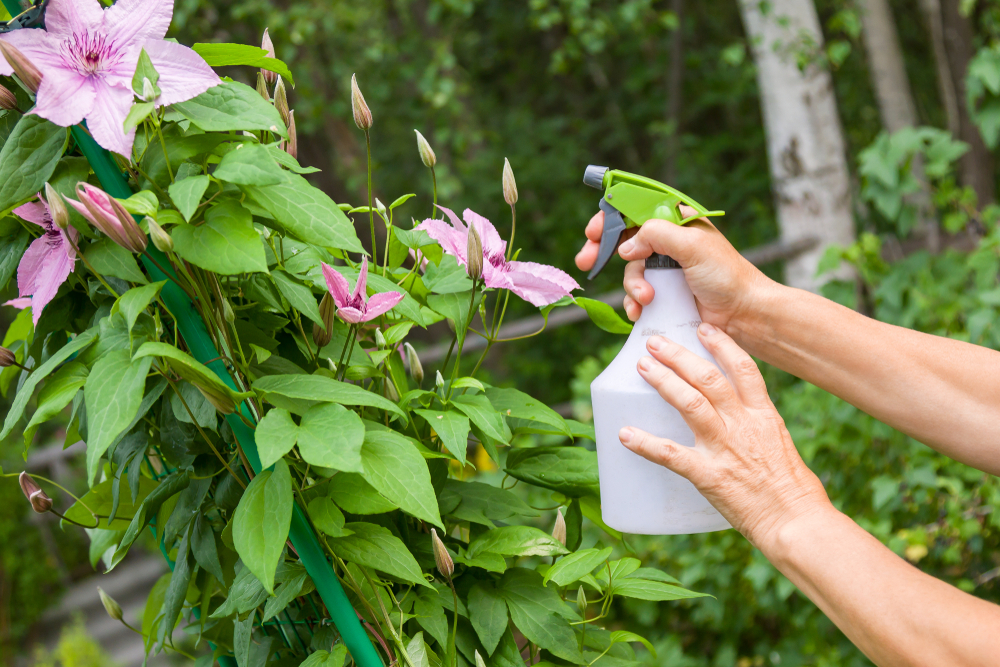
- For a bigger infestation, try a homemade insecticidal soap: mix 1 quart of water with 1 tablespoon of liquid castile soap and 1 tablespoon of rubbing alcohol.
- Alternatively, try a stinging nettle tea spray (apply every 2-3 days).
- To make it: soak about 1 pound of nettles in 1.25 gallons of water for 24 hours.
- Simmer for 30 minutes, strain it, let it cool, and you’re ready to spray.
White Ermine Moth (The “Mint Bear”)
The White Ermine moth is a pretty little white butterfly with black-spotted wings, but don’t let its looks fool you. In the summer, it lays eggs on the underside of mint leaves, and the resulting caterpillars are voracious eaters. If you don’t pick them off immediately, they’ll strip your plant bare. These larvae are about 1.5 inches long, brown, and hairy, making them fairly easy to spot. Pro tip: go hunting for them in the early morning when they’re most active.
Mint Leaf Beetle
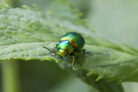
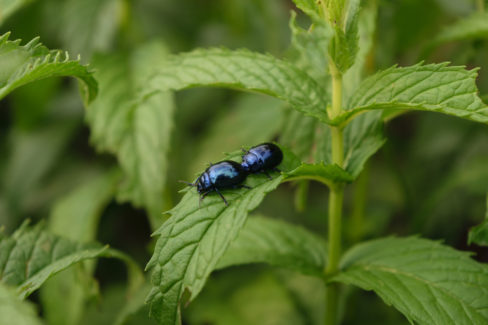
Starting in May, you might notice the Mint Leaf Beetle showing up for dinner. While the nibbled leaves are still safe to eat, these guys have a massive appetite. Here’s how to identify them:
- The beetles are about 1/3 of an inch long.
- They have a shiny, metallic blue-green to black shimmer.
- They have very distinct antennae.
- Their eggs are a bright, unmistakable yellow.
- The larvae (hatching around August) are yellow-brown with black heads.
- They have six strong legs and fine hairs on their bodies.
Since you’ll want to harvest your mint soon, definitely skip the harsh chemicals. These beetles and their larvae are big enough to pick off by hand. If things get out of control, give the mint a hard prune and spray it down with the soapy water mix mentioned above every few days.
Quick Tip:
When you’re picking off beetles or larvae, make sure to check the soil around the base of the plant too. Unlike aphids, these guys are fast climbers and will be back up on your mint leaves before you know it!