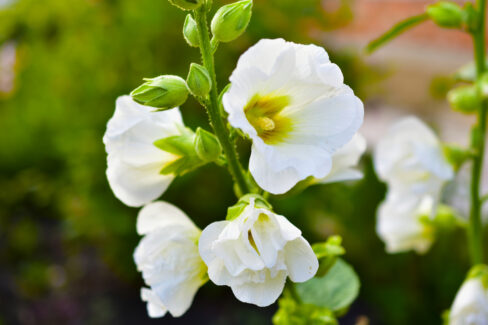
While hollyhocks are generally considered hardy, there are a few situations where you’ll want to step in and give them a little extra TLC before the first frost hits. Here’s the lowdown on when your hollyhocks need a winter coat and the best way to keep them cozy until spring.
When Do Your Plants Need Extra Protection?
Whether your hollyhocks can handle the cold on their own depends on the specific variety, their location in your yard, and how they’re being grown. If you’ve planted a more delicate species rather than a hardy variety, you shouldn’t leave them to face long freezes without some backup.
If you’re growing hollyhocks in containers, you definitely need to take action. Unlike plants in the ground, potted hollyhocks are more vulnerable because the frost can easily reach the root system through the sides of the pot.
Young plants also need a little hand-holding. They haven’t built up the same resilience as the “grown-ups” yet. A simple trick is to spread some evergreen boughs or a layer of leaves over them. This acts as a natural insulation blanket. Just remember to clear it away once the weather warms up in the spring!
Caring for Potted Hollyhocks
To protect your container plants, grab some garden fleece or burlap and wrap it around the outside of the pot. Top off the soil with some pine branches for extra warmth. Ideally, move the pot to a spot that’s shielded from the wind. Even better? Move them to a sheltered indoor spot if you can.
Here’s what to keep in mind for indoor wintering:
- Keep them in a bright, sunny room.
- Aim for temperatures between 45°F and 55°F (8°C to 12°C).
- Give them a drink about every two weeks.
A greenhouse or a cool, bright basement is usually the “sweet spot” for these plants. They do best when kept in that 45°F to 55°F range. Don’t forget the water! While hollyhocks don’t need nearly as much hydration in the winter as they do in the summer heat, you don’t want the root ball to dry out completely.