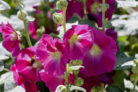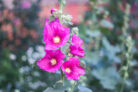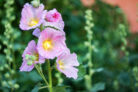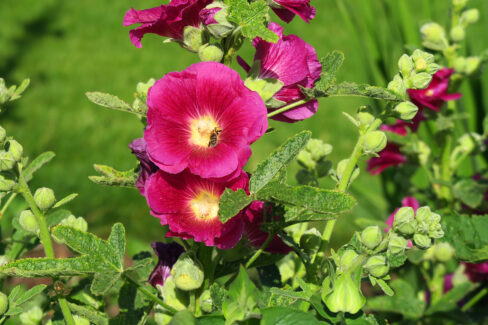
Looking at the leaves of your hollyhocks is the best way to tell if they’re happy in their spot and if their natural “engine” is running smoothly. Here’s the lowdown on what typical hollyhock foliage looks like and what those leaves can tell you.
What the Leaves Look Like
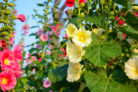
Hollyhocks (part of the *Alcea* family) are generally short-lived perennials. During their first year, they focus almost entirely on growing leaves rather than flowers. But don’t worry—the foliage is actually quite lovely! Once they start blooming, the flowers grow on tall, upright stalks lined with alternating leaves. If those leaves are a vibrant, lush green, you know your plant is thriving.
Key features to look for:
- Alternating leaf patterns
- Rounded leaf shapes
- Notched or “toothed” edges
- A mix of main leaves and smaller stipules (leaf-like appendages)
Spotting Trouble: Dealing with Hollyhock Rust
If you start seeing yellow spots on your leaves, it’s a sign that something is wrong. Usually, the culprit is hollyhock rust. This is a fungus that creates yellowish spots on the top of the leaf and reddish-brown pustules or “rust” spots on the underside. It’s pretty easy to spot once you know what you’re looking for.
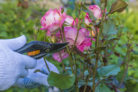
If you see this, you’ll want to jump into action quickly to save your plant. Otherwise, the fungus will keep spreading and can eventually kill the hollyhock. Grab a pair of sharp garden shears and make sure to disinfect them first. Snip off every single leaf that shows signs of the fungus. Be sure to toss the clippings into a sealed trash bag—don’t put them in your compost pile! If you compost infected leaves, the fungus can survive and spread back into your garden when you fertilize later.
Using the Leaves (Yes, They’re Edible!)
Did you know you can actually use young hollyhock leaves in the kitchen? They are completely edible and make a great addition to fresh salads. In fact, no part of the hollyhock is toxic. You can even use the hollyhock flowers to brew a nice herbal tea. Historically, hollyhocks have been used for their healing properties, and you can find plenty of cool details about their medicinal history in herbals and botanical guides.