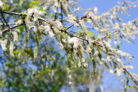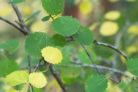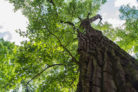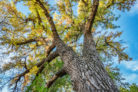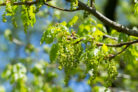
Poplars are some of the earliest bloomers in the garden world, waking up right alongside hazel and alder. You can spot all three by those iconic, fuzzy catkins. On a poplar tree, these catkins start developing as early as February—well before the leaves even think about popping out.
Fun Facts About Poplar Blooms
Even before winter has officially packed its bags, you’ll start seeing those classic catkins forming on poplar branches. These catkin blooms dangle from the twigs like little fuzzy worms and are actually made up of many tiny, subtle flowers. Here’s what’s going on under the microscope:
- There are both male and female catkins, and they look very similar at first glance.
- The flowers are stalked.
- They grow right from the leaf axils.
- These flowers don’t have petals or sepals (no floral envelope).
- Male flowers are packed with up to 60 stamens.
- Female flowers feature an ovary made of two to four fused carpels.
- They rely entirely on the wind for pollination.
Poplars are “dioecious,” which is just a fancy gardening term meaning that male and female flowers grow on completely separate trees. Unless you’re a pro at identifying flower structures, it’s pretty tough to tell them apart just by looking at the catkins. A poplar tree usually needs to be between 6 and 11 years old before it starts blooming for the first time. Once the seeds ripen around June, the seed capsules pop open, and the wind takes it from there.
The Seeds: “Summer Snow”
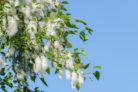
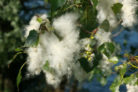
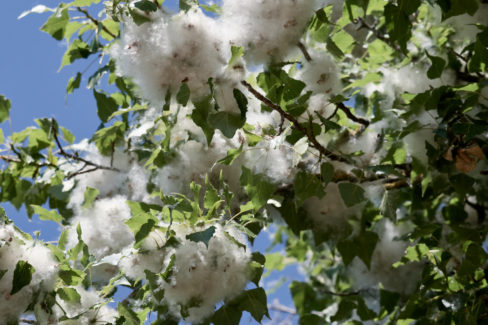
In the early summer, you might notice a pretty cool phenomenon often called “poplar snow” or “summer snow.” The wind kicks up white, fluffy tufts that can pile up inches deep in quiet corners of the yard. A single poplar tree can pump out over 25 million seeds a year, each one wrapped in a little ball of “cotton” to help it catch a breeze. If you pull the fluff apart, you’ll find the tiny seeds tucked inside. The wind carries them over huge distances, which is why poplars spread so easily. However, these seeds are a bit picky—they’ll only sprout if they land somewhere with plenty of moisture.
One quick heads-up: if it gets exceptionally hot during “poplar snow” season, those big piles of fluff can actually become a fire hazard. In very dry conditions, intense sunlight has been known to cause large accumulations to self-ignite, which has unfortunately sparked forest fires in the past. Always good to keep an eye on those fluffy drifts!