Poplar trees start waking up as early as February. Long before their leaves even think about popping out, they develop rather subtle blooms. Now, don’t go looking for traditional flower petals here—poplars produce what we gardeners call “catkins.”
The Poplar Catkin
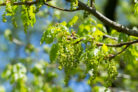
Between February and April, you’ll spot these catkins dangling from the branches. They look a bit like fuzzy, worm-shaped spikes and have a slightly sticky feel. Their reddish tint makes them pretty easy to pick out against the winter sky. If you gently pull one of those fluffy spikes apart, you’ll see it’s actually made up of dozens of tiny individual flowers. Since they don’t have showy petals to attract bees, they rely entirely on the wind to handle pollination.
Male vs. Female Trees
Poplars are what botanists call “dioecious.” In plain English? That means there are distinct male and female trees. Both versions grow catkins during blooming season, but if you look closely, you can tell them apart. Here’s how it breaks down for some of the most common varieties:
- Quaking Aspen
- Black Poplar
- Canadian Poplar
Quaking Aspen
On a Quaking Aspen, the female catkins are quite dainty, showing off a green hue with reddish bracts. The male catkins, on the other hand, are thick, grayish-brown, and usually cover the tree in massive clusters.
Black Poplar
The differences here are a bit more subtle. Generally, the male spikes look a little “limp” or droopy compared to the female catkins, which appear much sturdier and more robust.
Canadian Poplar
Again, you’ve got to be a bit of a detective here. Like all poplars, the male catkins house up to 60 stamens with separate filaments. The female catkins feature an ovary made of fused carpels—basically the command center for seed production.
The Fruit and “Summer Snow”
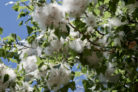
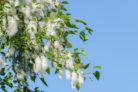
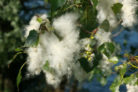
Once the wind does its job and pollinates the female trees, they start developing seed capsules filled with fluffy seeds. By early summer, it’s go-time. A single female poplar can pump out about 25 million seeds! Each seed is incredibly tiny—we’re talking fractions of a milligram—and is wrapped in a soft, white fluff. This “poplar wool” acts like a little parachute, allowing the wind to carry the seeds far and wide. If you have a group of female poplars nearby, the seed flight can get so intense it looks like a mid-summer blizzard. It usually takes a good rainstorm to finally wash away all that white fluff.