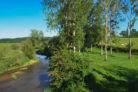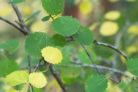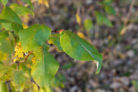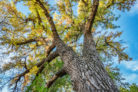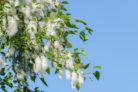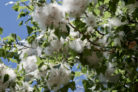
Not every poplar tree you see will produce fruit. These trees are actually “dioecious,” which is just a fancy way of saying there are distinct male and female trees. Once the wind does its job and pollinates the female trees, they start developing fruit—though the tiny seed capsules are so subtle you might not even notice them at first.
Poplar Flowering and Fruiting Timeline
In early spring, before the leaves even pop out, both male and female poplars grow those iconic, reddish catkins. They look a bit like fuzzy, drooping worms hanging from the branches. It can be tricky to tell the boys from the girls just by looking, but here’s how the reproductive magic happens:
- Male poplars have catkins with anywhere from 4 to 60 stamens that pump out pollen.
- Female poplars grow catkins with ovaries made of fused carpels and short styles with two to four stigmas ready to catch that pollen.
- The wind handles all the heavy lifting for pollination (scientists call this *anemophily*).
- Fertilization happens fast—usually within 24 hours of pollination.
- Tiny capsules begin to develop shortly after.
- By late May, the fruit is typically ripe, though the exact timing for seed maturity can vary depending on which species of poplar you have in your yard.
These little capsules have two to four valves that stay shut until the seeds are ready. Inside, the seeds are wrapped in a bundle of fine fibers that act like a parachute. These seeds are incredibly light—we’re talking fractions of a milligram! A single female poplar can pump out about 25 million seeds in one season, though only a lucky few will ever grow into a full tree.
“Poplar Snow”
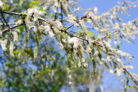
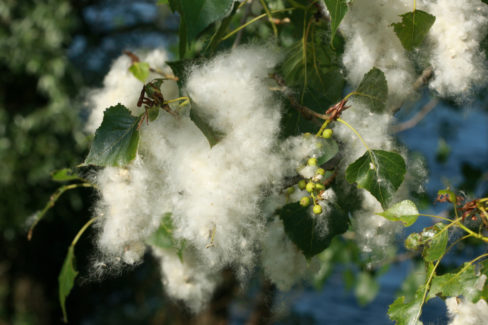
Come late May, those capsules burst open, and the seeds take flight. The fiber bundles expand, and the wind carries these soft, white tufts over huge distances. It looks just like a summer snowstorm! However, these seeds are picky; they’ll only germinate if they land on the perfect spot with the right soil and plenty of moisture. The poplar’s strategy is definitely “quantity over quality”—by releasing millions of seeds, they ensure at least a few survive. This wind-dispersal method is known as *anemochory*.
What is Poplar Fuzz Good For?
That soft fluff surrounding the seeds is actually made of cellulose fibers. Because it’s so light, the wind can carry it for miles. If the fluff lands on damp ground, it acts like a sponge, soaking up water to give the seed the hydration it needs to sprout.
Nature isn’t the only one using it, though! Birds love to line their nests with this cozy “poplar wool,” and back in the day, people even used these fibers to create high-quality, fine paper.