The poplar is a lightning-fast grower from the willow family that you’ll spot just about everywhere—lining riverbanks, shading parks, and standing tall in backyard gardens. They’re famous for those beautiful, swaying crowns, but there’s a catch: their aggressive root suckers aren’t exactly a gardener’s best friend.
Understanding the Poplar’s Root System
Poplars feature a root architecture that sits somewhere between a heart-shaped system and a horizontal system. If you were to take a peek underground, you’d find:
- Horizontal main roots
- “Sinkers” that reach downward
- Upward-growing suckers (shoots)
- Long, thin, and minimally branched fine roots
Cool Facts About Poplar Roots
Like most trees, the majority of the action happens underground. These roots spread out horizontally in every direction. You won’t find a deep taproot here; instead, poplars keep their root network relatively close to the surface. They use a “division of labor” strategy: fine roots handle the nutrient and water intake, while the thick, coarse roots act as anchors to keep the tree upright.
The Trouble with Root Suckers
Poplars don’t just rely on seeds to spread; they are masters of vegetative reproduction through root suckers. These are lateral roots that grow vertically toward the surface to sprout new shoots. These “propagation-happy” runners can take over a lawn in no time, buckle paved walkways, and crowd out your favorite flower beds. These little saplings pop up everywhere and are notoriously tough to get rid of. Even if you cut the main tree down, you might end up with a mini-forest growing around the stump!
In fact, there’s a famous colony in the U.S. (known as Pando) that grew from a single poplar. It covers 106 acres, consists of about 47,000 trunks, and is estimated to be 80,000 years old. Talk about staying power!
How to Manage Root Suckers
If you let them go, you’ll have your own private poplar forest within a few years. Just running the lawnmower over the shoots is a temporary fix—they’ll just pop back up somewhere else a few days later.
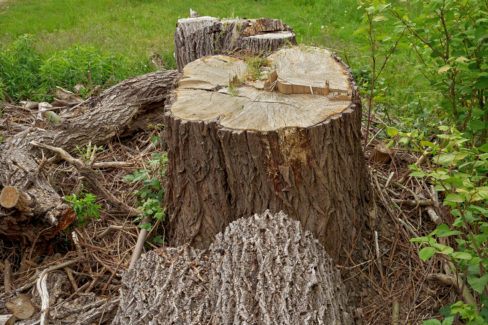
The real challenge starts when you fell the tree. The root system often goes into “survival mode,” sending up a frantic wave of new shoots around the stump to keep the species going. Even the horizontal roots will keep pushing out new growth. The only foolproof way to stop a poplar invasion is to get your hands dirty and dig. You have to remove the stump and the main root runners, even if they wind all the way across your yard. Honestly? This is usually the point where it’s worth renting a mini-excavator to get the job done right.