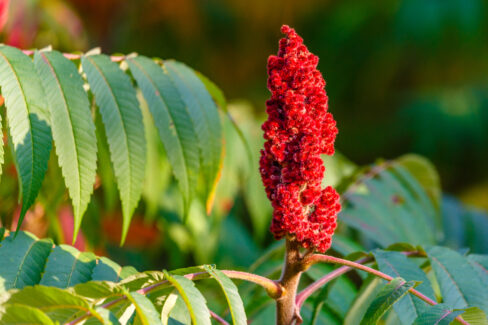
The Staghorn Sumac (botanical name *Rhus typhina*) is a super low-maintenance ornamental tree that’s famous for its absolutely stunning fall colors. If you’re looking to add more of these to your yard, you’re in luck—propagating them with offshoots is incredibly easy because their dense root systems are constantly sending up new little saplings.
Uncontrolled Spreading
The Staghorn Sumac is one of those plants that grows via “runners” (rhizomes) just beneath the soil surface. These roots can stretch out up to 30 feet! Along these runners, new baby plants pop up all the time. Before you know it, you’ve got a thicket on your hands, because once the shrub hits its second or third year, it can produce 20 to 30 new shoots every single season.
If you aren’t looking for a backyard takeover, you can keep those roots in check by installing a root barrier. Just keep in mind that if you block the runners, you won’t get those natural offshoots, so you’ll have to look into other ways to propagate.
Controlled Propagation with Offshoots
Because the Staghorn Sumac is such a vigorous grower, “controlled” propagation is actually the tricky part! The shrub usually puts out way more shoots than the average gardener actually needs. On the bright side, it’s a piece of cake to grab a transplant for propagation. The best time to do this is in the fall or early spring before the leaves start budding out. Here’s how you do it:
- Look for root suckers popping up (usually within about 15 feet of the mother plant).
- Use a sharp spade to cut around the shoot from all sides, severing it from the main root.
- Replant the offshoot in its new home.
To make sure your new addition doesn’t start its own wild colony, I highly recommend putting a root barrier in the ground the moment you plant it.
One last tip: think long and hard about where you place your new tree. Removing a sumac later on is a real headache. It’s tough to get rid of because you have to dig up every single piece of the root system. If even a tiny fragment stays in the ground, it’ll sprout a new tree, and you’ll be right back where you started. It can turn into a bit of a cycle, so plan ahead!