Even though sea buckthorn is known for being super low-maintenance, you shouldn’t just let it go wild. If you leave it to its own devices, it has a nasty habit of getting “leggy” or bare in the center, and your berry harvest will start to dwindle. That’s more than enough reason to grab your pruning shears every now and then!
When is the best time to prune sea buckthorn?
Technically, sea buckthorn doesn’t *need* to be pruned to survive—it’ll grow just fine on its own. But if you want a beautiful shrub and a bucket full of berries, a little haircut is essential. Eventually, the crown will thin out and look a bit scraggly, which isn’t exactly the “garden aesthetic” most of us are going for. Plus, the fruit yield will drop year after year.
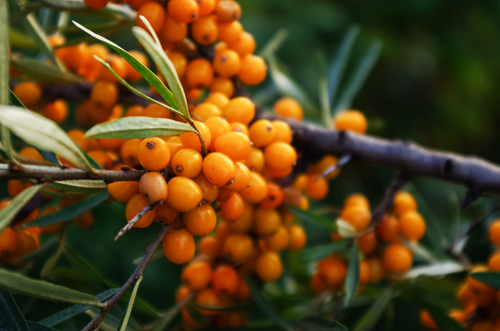
The best time to prune is right after the harvest, which usually lands in late winter. Keep in mind that there’s a difference between male and female plants (only the ladies produce those bright orange berries!). Because of this, the females need a bit more attention. Here’s a good rule of thumb:
- Prune female plants every two years.
- Prune male plants every four years.
How should you prune your sea buckthorn?
Once you’ve got your timing down, there are a few things to keep in mind. As the name suggests, sea buckthorn has some serious thorns! Pruning can turn into a prickly situation pretty fast, so make sure you’re wearing heavy-duty, thorn-proof gardening gloves to protect your hands.
Focus on the branches that just finished fruiting. These won’t produce berries again next year, so cutting them back encourages fresh new growth. Just be careful not to take off more than half of the total shoots at once. It’s also a smart move to thin out the inner part of the crown. If you skip this, the center will lose its leaves over time, which really takes away from the look of this decorative shrub.
What can you do with the cuttings?
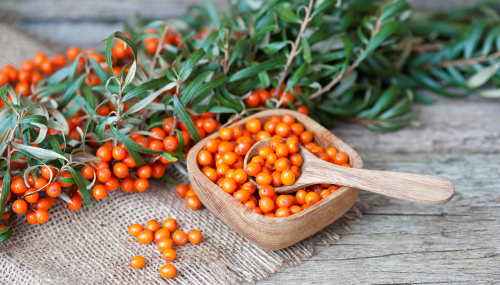
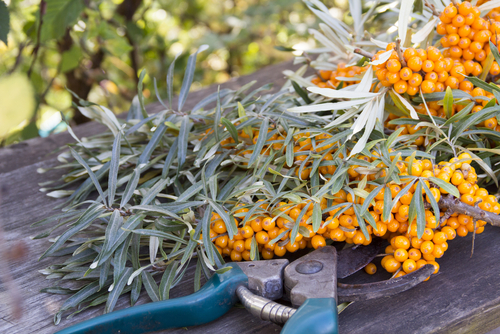
Don’t just toss those trimmings onto the compost pile right away! If there are still berries on the branches, definitely harvest them for a healthy snack. Beyond that, the berry-laden branches look absolutely stunning in a vase as a rustic centerpiece.
You can also use the cuttings for propagation to grow new plants. However, most gardeners don’t bother with that because sea buckthorn is a pro at spreading via root suckers. It basically does the work for you, sending up new little shoots all on its own!