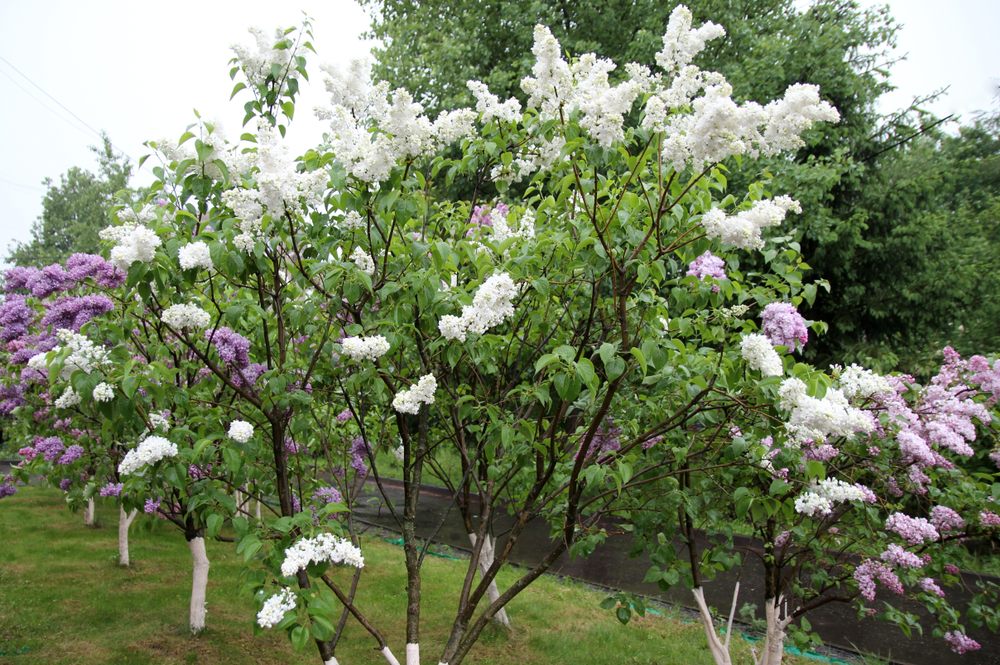
Naturally, the Common Lilac grows as a multi-stemmed shrub, getting woodier and more tree-like as the years go by. But did you know you can actually train a young lilac into a “standard” (that’s gardener-speak for a tree form)? It’s a great way to save space and add some height to your garden. Here’s how to make it happen.
The Best Time to Prune
If you have a standard shrub-style lilac, you really only need to prune it once a year to keep it happy and blooming. However, a lilac tree needs a bit more regular attention. Lilacs love to send out “suckers” (those little shoots coming up from the roots), and if you don’t stay on top of them, your tree will try to turn back into a bush. Make it a habit to snip off any root suckers and side shoots on the trunk, leaving only your main central stem. This encourages the plant to put its energy into growing a tall, sturdy trunk and a lush, full canopy.
By clearing out the “junk” regularly, your lilac can focus all its strength on that beautiful crown. To keep the top looking full, you’ll want to give the crown a light trim every now and then—just make sure to wait until *after* the flowers have faded. Lilacs set their buds the year before, so if you prune before the blooming season, you’ll accidentally cut off all those gorgeous purple flowers!
How to Properly Prune Your Lilac Tree
Think of maintenance pruning (removing unwanted shoots) as an “as-needed” task. However, thinning out the actual crown should only happen once a year; otherwise, the plant might get stressed and stop flowering. Here’s your checklist for what to snip:
- Any wild shoots coming from the roots or the sides of the trunk.
- Scrawny, weak twigs that look like they aren’t going anywhere.
- Old or dead wood.
- Branches that are crossing or rubbing against each other.
- Heavily bent or distorted shoots.
- Twigs growing inward toward the center of the tree.
- Any “leggy” branches in the crown that don’t have many leaves.
When you prune, make sure to cut the shoots off right at the base. If you’re starting with a very young lilac that you want to train into a tree, here’s a pro tip: next year, cut all the new growth back by about half. This stimulates the plant to branch out, giving you a much denser, fuller canopy. To get that classic rounded tree look, trim the upward-growing branches by about a third while leaving the outer branches slightly longer.