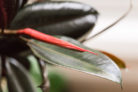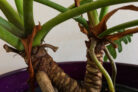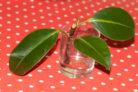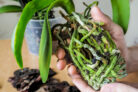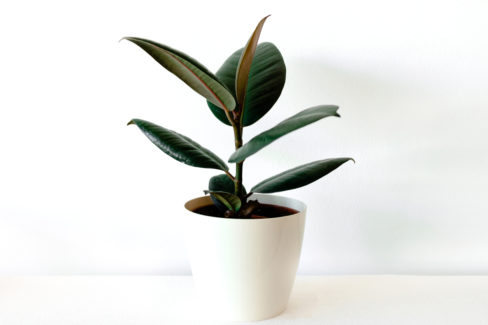
Most of us think of roots as the part of the plant that stays hidden underground. But some plants, like the Rubber Tree (*Ficus elastica*), like to do things a little differently by growing “aerial roots.” These are roots that sprout right out of the trunk or woody branches instead of staying tucked away in the soil.
Aerial Roots
In the wild, a plant grows aerial roots mainly for stability. They grow downward from the branches until they hit the ground and anchor themselves. Depending on how high up they start, these roots can grow several feet long just to reach the dirt!
Aerial Roots on Houseplants
When you’re growing a Rubber Tree indoors, those aerial roots usually serve two main purposes:
- Keeping the plant stable
- Making up for a lack of nutrients or water
Stability
If you have a particularly large Rubber Tree in a pot, it might start growing aerial roots to help support its heavy branches. These roots aren’t very picky about where they land, either. While they’d prefer soil, they’ll happily try to anchor themselves to whatever is nearby, including:
- Neighboring plants
- Your walls
- Furniture
Nutrient Deficiencies
More often than not, a Rubber Tree in your living room grows aerial roots because it’s hungry or thirsty. If the roots in the potting soil aren’t getting enough nutrients or water to the rest of the plant, the *Ficus elastica* tries to pull what it needs directly from the air instead.
Should You Cut Aerial Roots?
Since these roots are actually doing a job for your tree, it’s usually best to leave them alone. If you absolutely feel the need to trim them, wait until they are at least a few inches long; the plant handles the “surgery” much better at that stage. Just a heads-up, though: sometimes pruning them back actually triggers the plant to grow even more roots!
Solutions for Aerial Roots
The best way to keep aerial roots in check is to make sure your Rubber Tree is happy and healthy. If the underground root system is well-fed and hydrated, the plant won’t feel the need to go searching for extras. Often, simply increasing the humidity at its location or fixing a nutrient deficiency will stop new roots from forming.
If the roots have already grown pretty long, you don’t have to cut them—you can actually redirect them. The next time you are repotting your tree, gently guide those aerial roots down into the fresh soil. Once they get a taste of the “real” dirt, they’ll anchor themselves and act just like normal roots.