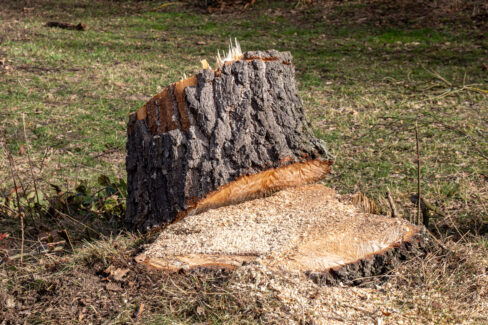
“Killing a maple tree”—man, that sounds harsh, doesn’t it? But let’s be real: sometimes a tree just has to go. Whether it’s outgrown its space or is causing issues, you need a method that gets the job done without a ton of back-breaking labor. One of the most effective ways to handle this is a technique called “girdling” (or ring-barking).
What Exactly is Girdling?
Girdling is a tried-and-true forestry trick where you essentially “cut off the power” to the tree. By removing a strip of bark in a complete circle around the trunk, you interrupt the tree’s transport system. Specifically, you’re stopping the flow of sugars produced by photosynthesis from the leaves down to the roots. Without those nutrients, the tree eventually dies.
The catch? It’s not an overnight fix. Since the tree can still pull water and minerals up from the soil for a while, the process can take anywhere from one to three years.
The upside is huge, though. You don’t need heavy machinery, there’s no risk of a massive tree falling onto your house or power lines, and—best of all—it prevents those annoying “stump sprouts” that usually pop up after you chop a tree down.
How to Girdle a Tree
You’ll want to wait until summer when the sap is flowing freely. Grab some heavy-duty work gloves, a drawknife (the two-handled kind), a wire brush, and a marking tool. Here’s your game plan:
- Pick a spot on the lower part of the trunk. You might want to mark it with chalk or tape to keep your line straight.
- Use your drawknife to peel away a strip of bark about 2 to 4 inches wide. Make sure the ring goes all the way around the tree until the ends meet perfectly.
- Use a hook or scraper to clear out any leftover bits of bark in the crevices.
- Take your wire brush and scrub away the entire cambium layer (that’s the slippery green stuff under the bark). Be careful here: you want to remove the “veins,” but leave the actual wood underneath intact.
Quick heads-up:
Before you start, check your local ordinances! Many cities have tree protection laws based on the trunk’s diameter. You might need a permit before you can legally say goodbye to your maple.
What Happens Next?
Once you’ve finished the girdling, the hard work is done. Now, nature takes its course. Depending on the size of the tree, it can take up to 36 months to fully die off. Here’s what to expect:
- First, the leaves will start looking smaller and sparser.
- Small twigs will begin to drop.
- Eventually, larger branches will die and fall.
- Finally, the main structure of the tree will give way.
Pro Tip:
If people or pets hang out near the tree, try to prune off dead branches as they appear. You don’t want a “widowmaker” falling unexpectedly!
Wrong Place, Wrong Time
Sometimes we have to remove a maple because of disease, but more often than not, it’s just a case of a “volunteer” tree. A stray maple seed lands in the wrong spot, and before you know it, you’ve got a tree growing where it shouldn’t be.
The best advice? Pull those seedlings as soon as you see them! And when you are ready to plant a maple on purpose, make sure you pick a location where it has plenty of room to grow for years to come.