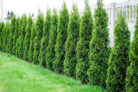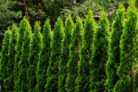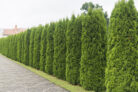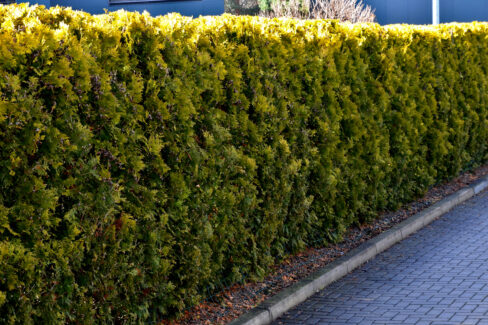
If you’ve ever decided to take out an old Arborvitae (Thuja) hedge, you know the real challenge isn’t the branches—it’s the roots. Getting those stumps out of the ground takes a fair amount of muscle and a good bit of patience. If you’re ready to clear some space in your yard, here’s my guide on how to tackle those stubborn Thuja roots.
How do you remove the roots of an Arborvitae hedge?
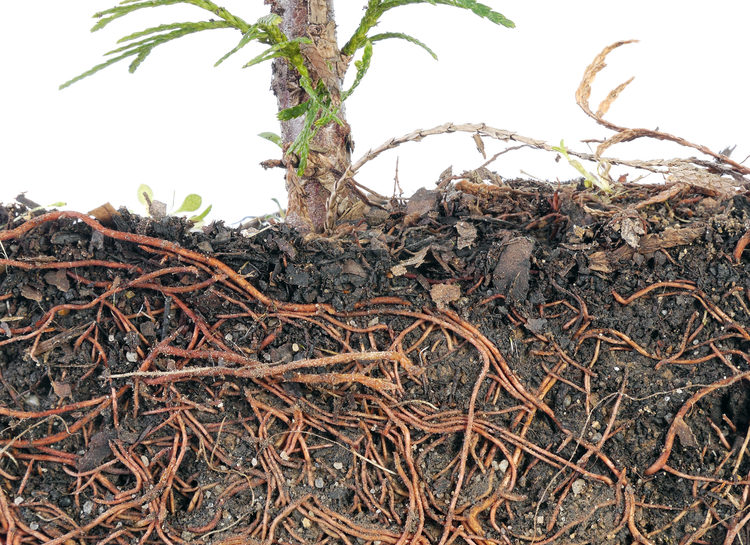
Arborvitae are shallow-rooted trees, meaning their roots spread out wide rather than digging deep into the soil. However, when they’re planted as a hedge, those roots become a tangled, matted mess over time. This makes a hedge much harder to transplant than a single tree. If your hedge is in a bad spot or you’re just ready for a total garden makeover, you’re likely looking at a full removal.
Tools you’ll need
Before you start digging, make sure you have these tools handy:
- A sturdy saw (a reciprocating saw works wonders here)
- A garden fork
- A sharp spade
- Optional: A winch or come-along for the heavy lifting
Step-by-step: Getting those roots out of the ground
To get your Arborvitae hedge out root and all, follow these steps:
- Cut the trees down, but leave a long enough stump to use as a lever (or to attach a winch to).
- Dig around the base until you start seeing the thick main roots.
- Use your spade to pry the root ball upward from underneath.
- Pull the root ball out of the soil.
- If it’s stuck, use your saw to cut through the thickest, most tangled roots. This allows you to pull the stump out in smaller, more manageable pieces.
If your hedge has been established for decades, those roots are going to be stubborn. Using a winch can save your back, or you can always hire a pro to handle the heavy machinery. One thing I don’t recommend? Trying to poison the hedge first—it’s ineffective and bad for your soil.
Can you just leave the roots in the ground?
Technically, you don’t *have* to dig them up if you aren’t planning on planting a new hedge in the exact same spot. Just keep in mind that Arborvitae roots rot very slowly. As they eventually break down, the ground above them will sink. If you decide to leave them, cut the stump as low as possible and cover the area with fresh topsoil. You’ll at least be able to sow some grass seed over the top!