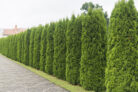
Let’s be real: pulling up the roots of a full-grown Thuja (Arborvitae) or an entire hedge is a total workout. If your game plan is just to plant some grass where the hedge used to be, you can actually take the easy route and let the roots rot away naturally in the soil.
How long does it take for Thuja roots to decompose?
One nice thing about Thujas compared to other shrubs is that once you cut them down to the stump, they won’t try to grow back. However, those roots are stubborn—it usually takes several years for them to fully decompose. As the wood breaks down, the ground will start to sink a bit. Because of this, you’ll want to stick to planting lawn or shallow-rooted groundcovers in that spot for a while. Just make sure to top off the area with plenty of fresh topsoil first.
Can you speed up the rotting process?
You bet! If you want to get those roots moving along a little faster, you can give nature a helping hand. After you’ve cut the tree down, follow these steps:
- Grind down the stump as far as you can.
- Drill or poke plenty of deep holes into the remaining root mass.
- Fill those holes with compost.
- Cover everything with garden soil.
Whether you use a drill, a spade, or a saw to make those holes, the goal is the same: getting compost into the heart of the root system jumpstarts the decay process. Just keep in mind that the faster they rot, the faster the ground will settle, so keep some extra dirt handy!
What’s the best way to dig out Arborvitae roots?
If you’re planning on planting something substantial in that spot right away, you’re going to have to roll up your sleeves and dig them out. If it sounds like too much, you can always hire a landscaping crew to handle the heavy lifting for a fee.
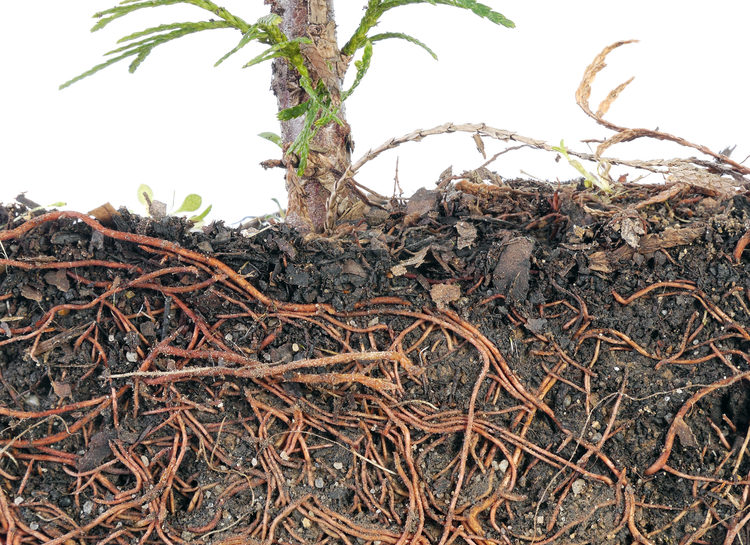
Small trees are pretty easy to pop out, but a mature hedge is a different story because of the size and weight. Since Thujas have shallow but wide-spreading roots that often get tangled with their neighbors, you might even need a winch or a vehicle to help yank them out.
Pro tip: If you’re planning to pull the roots, leave a good-sized stump attached to use as a lever. Dig around the root ball until you see the thickest roots, then use a spade to pry the root stock up. If you hit any particularly thick roots, just cut through them with a saw to make the job easier.