Adding a few compact trees or shrubs is one of the easiest ways to give your front yard a major curb appeal boost. If you’re looking for the perfect focal point that won’t take over your entire lot, you’re in luck! We’ve rounded up seven of the most popular small trees for front gardens, plus a little “insider tip” at the end.
[[pflanzen]]
++Globe Black Locust (Robinia pseudoacacia ‘Umbraculifera’)
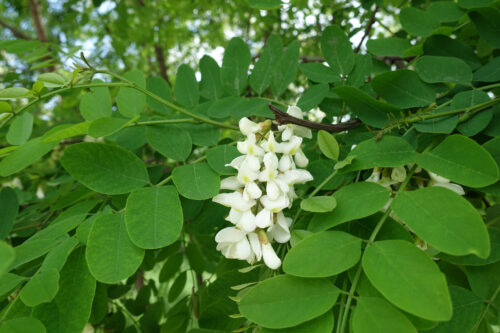
With its perfectly round, dense, and bushy crown, the Globe Black Locust is a real eye-catcher that fits beautifully into smaller front yards. While it can reach a diameter of about 13 feet, it’s incredibly forgiving and can be pruned back to whatever size fits your space. This tree is about as low-maintenance as it gets and even handles urban pollution like a champ. It doesn’t flower, so the star of the show is the delicate, feathery foliage—bluish-green on top and a soft light green underneath.
++Willow-Leaved Pear (Pyrus salicifolia)
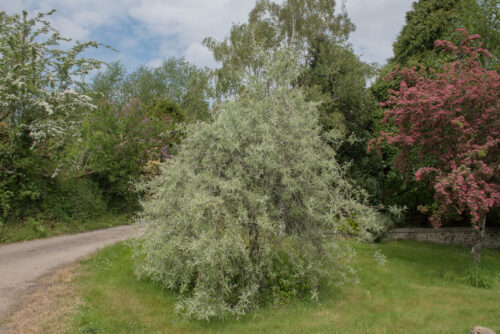
This ornamental wild pear is all about elegance and charm. It usually features a short, often twisted trunk and a wide crown with lovely weeping branches. The long, silvery-fuzzy leaves look a lot like olive tree foliage, giving your yard an instant Mediterranean vibe. In May, the tree is covered in white blossoms that bees absolutely love. By early fall, it produces small ornamental pears that, while tart, make for some pretty delicious jellies!
++Dwarf Korean Lilac ‘Palibin’ (Syringa meyeri ‘Palibin’)
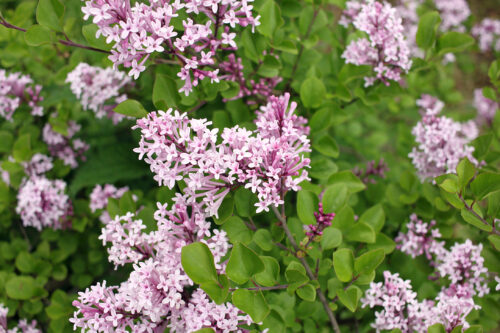
If you want a showstopper for early summer, this is it. The ‘Palibin’ lilac produces stunning, pale pink flower clusters that smell absolutely heavenly. It grows in a dense, bushy shape and tops out at around 5 feet, making it a perfect fit for tight spaces. The dark green leaves are much smaller than those on a standard lilac, giving it a refined, dainty look. Pro tip: Plant this one in a sunny to partly shaded spot to get the most blooms possible.
++English Hawthorn (Crataegus laevigata)
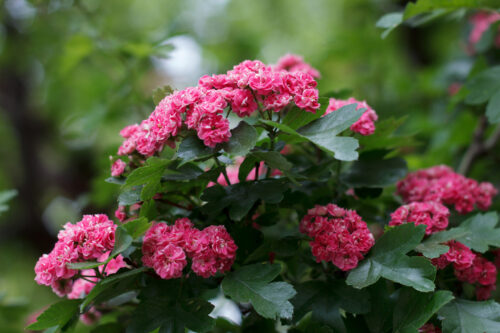
This hardy shrub is a front-yard favorite because it handles pruning so well. Between May and June, it puts on a spectacular show with vibrant crimson flowers. Since the blooms grow in thick clusters at the ends of the branches, the whole tree looks like it’s glowing from a distance. The glossy, dark green leaves have a classic lobed shape. Just make sure to give it plenty of sun; if it’s in the shade, you won’t get nearly as many of those beautiful red flowers.
++Purple Leaf Plum (Prunus cerasifera ‘Nigra’)
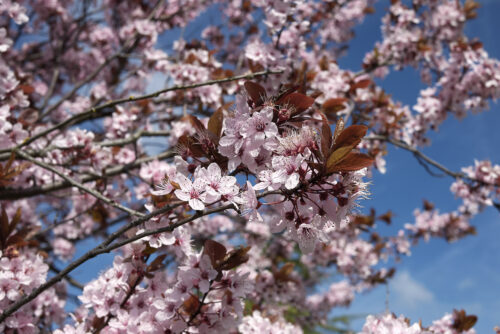
Gorgeous foliage, delicate flowers, and edible fruit—the Purple Leaf Plum really has it all. Before the leaves even appear in spring, the tree is covered in soft pink blossoms that are a favorite for local pollinators. The leaves start out wine-red and quickly turn a deep, dramatic dark purple, providing a great contrast to the green plants in your garden. By July, you’ll have sweet, cherry-sized plums that are perfect for making homemade jams or preserves.
++Globe Norway Maple (Acer platanoides ’Globosum’)
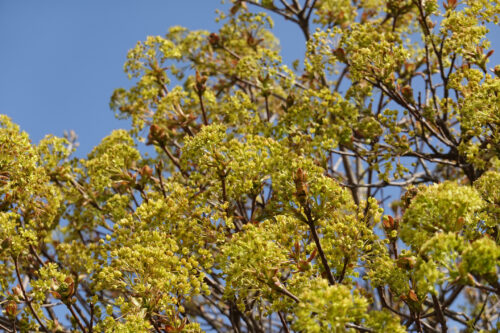
This compact maple grows a dense, globe-shaped crown on top of a straight trunk, giving it a very tidy, architectural look. The leaves start out a reddish-brown in spring, turn a rich green in summer, and then shift to a brilliant golden yellow in the fall. It’s a tough, fuss-free tree that handles city life and short dry spells without a problem. If you’re working with a very small space, don’t be afraid to give it a heavy prune to keep it the size you want.
++Snowy Mespilus / Serviceberry (Amelanchier rotundifolia)
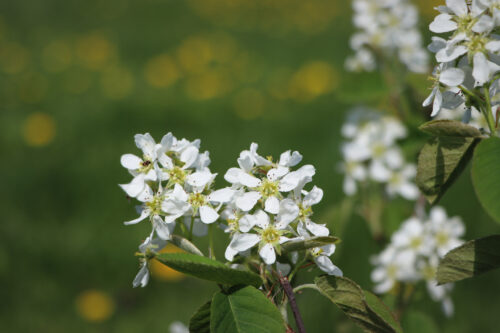
Robust, winter-hardy, and ready for any weather, the Serviceberry is a fantastic choice for a front garden. It starts with an upright growth habit and develops a wider, graceful crown with slightly drooping branches as it ages. In spring, it’s covered in starry white flowers, which eventually turn into tasty berries that flavor-wise are a mix between a blueberry and a cranberry. You can eat them fresh, dry them, or turn them into a killer marmalade.
%%Mugo Pine (Pinus mugo)
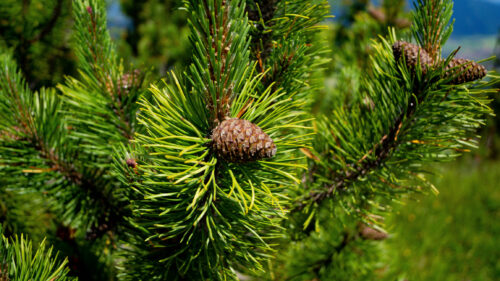
For a more natural or “wild” look, the Mugo Pine is our secret weapon. It has a unique, rugged growth habit that works perfectly in rock gardens or modern landscapes. It often grows as wide as it is tall, though you can find varieties that stay low like a cushion or form a tight ball. The needles stay on the branches for up to nine years, keeping it green year-round. After flowering in mid-summer, this hardy evergreen produces charming, dark brown cones that add great texture to your winter garden.