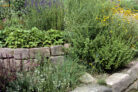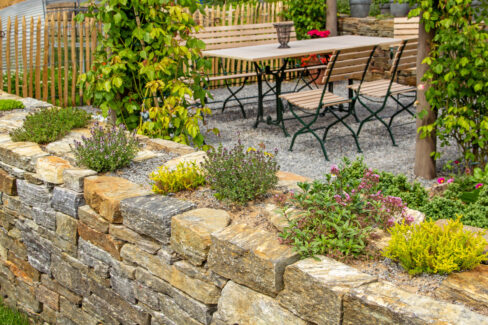
Since stones come straight from nature, they blend perfectly into any lush, colorful garden. You’ve probably seen stone borders around herb beds before—they look great, right? But there’s actually more to it than just curb appeal. Using stones can actually help your herbs grow healthier, bushier, and way more flavorful. Here’s the “secret sauce” behind why stones and herbs are a match made in heaven.
Stones are natural heat lamps
Many of the perennial herbs we love to grow are heat-seekers. Most of these fragrant favorites originally hail from the sunny Mediterranean. In their native habitat, the soil is naturally rocky, which is a huge part of why they thrive there. Stones act like little batteries: they soak up the sun’s intense heat during the day and slowly release it back into the soil and air at night. In our home gardens, the soil is often denser and the nights can get pretty chilly. By strategically placing stones, you’re essentially giving your herbs a “night sun” to keep them cozy.
Which herbs love the heat?
Basically, any herb that is packed with essential oils will thrive in a stony environment. The more sun and warmth they get, the more oils and aromatic compounds they produce. If you want your kitchen garden to smell amazing, try adding stones around these sun-worshippers:
- Savory
- Curry Plant
- Lavender
- Bay Laurel
- Olive Herb
- Oregano
- Rosemary
- Sage
- Thyme
- Hyssop
The classic herb spiral
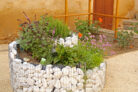
Stones aren’t just functional; they’re a fantastic design tool. If you want a real showstopper in your yard, consider building a herb spiral out of fieldstones (sometimes called a “herb snail”). You’ll want to build it in a sunny spot facing south and fill it with a well-draining soil-and-sand mix. The cool thing about a spiral is that it creates different microclimates. While the top is hot and dry, the base and the north-facing side offer a bit of shade. This means the list of herbs for your spiral can even include varieties that prefer a break from the midday sun—no need to start a second garden bed!
Quick Tip:
If you’re planning to plant a wide variety of herbs in your spiral, aim for a footprint of about 65 square feet (6 square meters) to give everyone enough room to breathe.
More ways to use stone in your garden
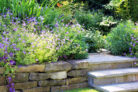
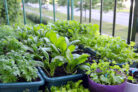
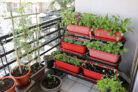
If a spiral feels like too big of a project, you can always go with a classic rock garden. These look stunning when you mix your herbs with flowering perennials. Plus, a thick layer of gravel or small pebbles acts as a natural mulch, making it super low-maintenance by blocking weeds. Another easy idea? Group a few stone planters together. Even with just two or three pots, you can create a “warm” herb garden right on your balcony.