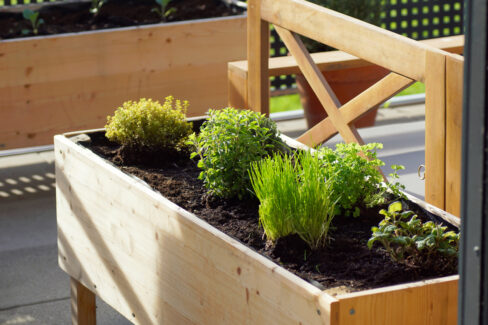
Imagine it’s the middle of summer: you step outside, and the air is thick with the scent of fresh basil and rosemary. You can almost taste the homemade pesto and herb-crusted chicken already! That dream is usually what gets us fired up to start a herb garden. But hold your horses! Before you grab a shovel, there are a few common mistakes that are tough to fix once the plants are in the ground. To make sure your green thumb actually stays green, follow along with our guide.
Why You Need a Herb Garden
If you’re still on the fence about whether the effort is worth it, let me tell you—it totally is. Sure, there’s some sweat equity involved at the start, but the payoff is huge:
- Fresh, organic herbs right at your fingertips whenever you need them.
- You get to grow exactly what you love to cook with.
- You can try out rare or exotic varieties you’ll never find at the grocery store.
- Got a bumper crop? Just dry or freeze the extras for a winter stash.
- It’s way cheaper than buying those little plastic clamshells at the store.
- Herbs are gorgeous and add a great look to your yard.
- Plenty of herb gardens are actually very low-maintenance once they’re established.
Some Herb Garden Ideas
I could talk all day about different garden styles, but let’s look at the most popular ways to set things up. Maybe one of these will spark a “lightbulb moment” for your own backyard.
The Herb Spiral
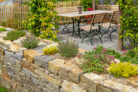
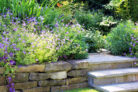
A herb spiral is a genius design made from fieldstones that caters to the different needs of various plants. If you build and fill it correctly, it creates four distinct microclimates in one small footprint. Here’s what to keep in mind:
- Aim for a footprint of about 30 to 60 square feet.
- Pick a spot with full sun.
- Make sure the bottom of the spiral opens up toward the south.
- Use different soil mixes (substrates) for the different zones.
The Raised Bed Approach
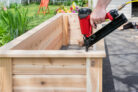
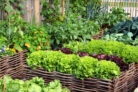
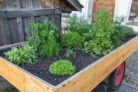
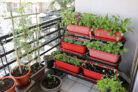
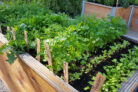
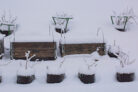
Raised beds are a lifesaver for your back and can even double as a privacy screen or a garden divider. For herbs, the bed doesn’t need to be massive; you can even fit a small one on a balcony. Just keep the width under 4 feet so you can reach the middle without stretching. You can build a wooden herb bed yourself or buy a pre-made kit. Just a heads-up: some herbs are more sensitive to cold in a raised bed, so you’ll need to make sure they overwinter safely.
Flexible Designs with Paver Stones
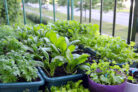
Walk into any home improvement store and you’ll see stacks of hollow planter stones. Think of them like Legos for adults—they come in all sorts of colors and shapes. You can stack them to create a terraced look, a curved border, or a long, modern row of squares. They are also perfect for a tiny herb setup on a patio or balcony.
The Pallet Herb Wall
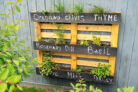
If you’re short on space, go vertical! Stand a wooden pallet upright and secure it to a wall. By nailing a few extra boards under the blocks, you create little “pockets.” Line them with landscape plastic, fill them with soil, and you’ve got a living wall of flavor.
Location and Soil
Most herbs produce those amazing essential oils and flavors because of the sun. So, generally, you want a sunny spot. However, some herbs actually prefer partial shade. If you have a herb spiral, the “shady side” is perfect for them. You could also just have two separate small beds in different spots to keep everyone happy.
The beauty of a herb spiral or a raised bed is that you can customize the soil. Mediterranean herbs (like lavender or thyme) love lean, sandy, dry soil. On the other hand, basil and parsley love moisture and plenty of nutrients. Do a little homework on your favorites so you can prep the soil just right before planting.
Mapping Out the Neighborhood
Don’t just stick plants in the ground wherever they look pretty! It’s important to know which herbs are good neighbors. In a spiral, placement is key, but even in a flat bed, some plants just “click” better than others:
- Mediterranean herbs usually love hanging out together.
- Basil plays well with parsley, oregano, or rosemary.
- Parsley is happy next to dill, cress, basil, chives, or chervil.
- Chamomile gets along great with dill, chervil, and marjoram.
- Thyme is fine with savory, tarragon, and coriander.
- Savory, lavender, and hyssop make a great trio.
Pro Tip:
Try to keep your annuals (plants that die after one season) and perennials (plants that come back every year) in separate sections. It makes it much easier to replant the annuals without disturbing the roots of your permanent herb bushes.
Planting Guide
Once you’ve prepped your bed or filled your containers, give the soil about two weeks to settle before you start planting. You can get your hardy, perennial herbs in the ground in early spring. For the more “diva” herbs that hate the cold, wait until late April or mid-May once the danger of frost has passed.
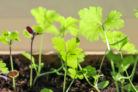
You can buy “starts” (pre-grown plants) at a nursery, start your own seeds indoors, or sow many varieties directly into the garden soil. Happy planting!