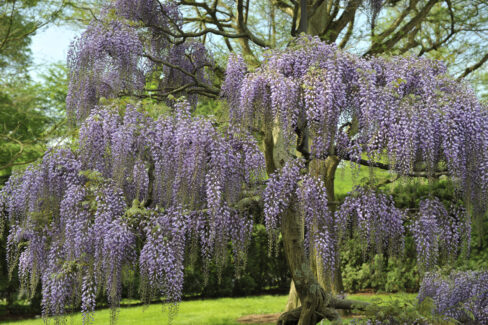
Wisteria is incredibly hardy and a real powerhouse in the garden. It grows fast and aggressively, which is usually exactly what we want when we’re looking for those stunning, cascading purple blooms and lush green foliage. However, while that growth is beautiful above ground, it’s a different story beneath the soil. If you’re planning on adding one to your yard, you definitely need to think about a root barrier.
Understanding Wisteria Roots
Wisteria doesn’t just reach for the sky; it’s just as ambitious underground. When planted in the right spot, it develops massive, powerful roots that dive deep into the earth. The root ball also spreads out wide around the main trunk. If left unchecked, these roots can actually press against house foundations or cause the plant to pop up unexpectedly in a completely different part of your garden. A good rule of thumb? Expect the root system underground to be just as large and expansive as the vines you see above ground.
Many gardeners have to take specific steps to keep this growth under control. Without a plan, those roots can easily lift up patio pavers, create tripping hazards in your walkway, or even interfere with underground utility lines like gas or water pipes. But don’t let that scare you off! Just like you prune the vines to keep them looking sharp, you can “prune” the growth direction underground too. With the right spacing and a little prep work, you can enjoy the beauty without the structural headaches.
Why a Root Barrier is a Game Changer
A professionally installed root barrier ensures your wisteria stays exactly where you want it. Now, you can find all sorts of materials at the hardware store, but keep this in mind: wisteria roots are incredibly strong. Flimsy fabric liners or wooden barriers usually won’t cut it—the roots will eventually bust right through them.
Here’s how to do it right:
- Dig a generous planting hole.
- Install your root barrier around the perimeter.
- Fill the hole with high-quality soil/substrate.
- Add a bit of lime to the soil to help encourage healthy root development.
- Plant your wisteria.
- Give it a good soak and water regularly.
For the best results, I recommend using a barrier made of concrete or heavy stone. Make sure you bury it deep enough; otherwise, those sneaky wisteria roots will just grow right underneath it. Even with a solid barrier in place, it’s always a smart move to plant your wisteria a safe distance away from your home’s foundation and any paved walkways.