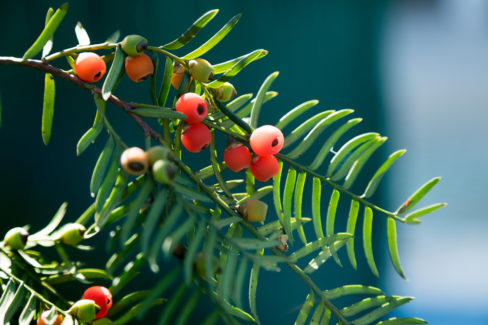
Most conifers produce cones, but the yew tree is the exception to the rule. Instead of woody cones, you’ll find small, bright red fruits that look a lot like berries. If you’ve got one of these trees in your yard, here’s the lowdown on what you need to know about its unique (and toxic) fruit.
Are yew berries poisonous?
Almost every part of the yew tree contains taxine, a highly toxic alkaloid. You’ll find it in the wood, the needles, and—most importantly—the seeds inside the fruit. Interestingly, the fleshy red part of the fruit (the aril) is actually not poisonous. If you ever decide to give one a taste, you must be extremely careful to spit out the seed, as that’s where the poison is most concentrated. Because these red fruits look so much like yummy berries, they can be a real hazard for curious toddlers. Definitely keep that in mind if you’re planning to plant a yew in a family-friendly garden.
It’s also worth noting that yews are dioecious, meaning they are either male or female. Only the female trees produce those signature red berries. If you have a male tree, you’ll see pollen in the spring but no fruit later on. They typically bloom between March and April, with the berries developing shortly after.
When do the first fruits appear?
Yews are the “slow and steady” types of the garden world. They focus on growing strong roots first and take their sweet time maturing. In fact, it can take up to 20 years before a yew tree blooms for the first time and produces fruit. If you’re patient, though, you can actually use those little seeds to grow brand-new trees!
How to grow a yew from seed:
- Harvest the ripe fruits from the tree.
- Remove the fleshy red pulp to get to the seed.
- Store the seeds in a cool place for a while (stratification).
- Plant them in cactus soil or a well-draining seed starter mix.
- Water regularly, but make sure the soil doesn’t get waterlogged.
Fair warning: growing yews from scratch requires a lot of patience. It can take up to two years just for the seeds to germinate! Once you see those tiny seedlings popping up, you can carefully transplant them to a suitable spot. Just remember that yews love partial shade; they can struggle if they’re stuck in harsh, direct midday sun all day long.