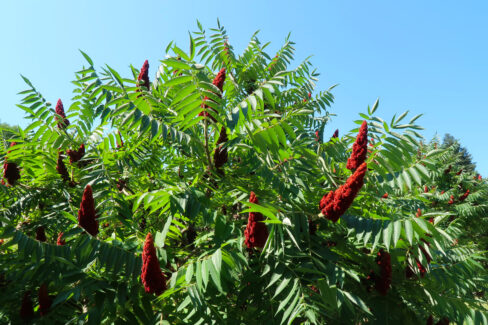
When it comes to the berries of the Staghorn Sumac (botanically known as *Rhus typhina*), there’s a lot of conflicting info out there. People often wonder: are they actually poisonous? And if not, how do you actually use them in the kitchen? Let’s clear up the mystery.
Appearance and Ripening
One cool thing about the Staghorn Sumac is that even though male and female flowers grow on separate plants, you don’t necessarily need a “pair” to see fruit. *Rhus typhina* can actually produce berries without prior fertilization.
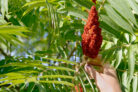
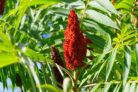
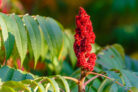
These tiny drupes (stone fruits) grow on the female flower panicles, turning a brilliant, velvety red as they mature. If you look closely at a single berry, you’ll notice:
- It’s about 4 millimeters (0.15 inches) in diameter.
- It’s covered in dense, fuzzy, long red hairs.
Inside, there’s a tiny stone about 2.5 mm long that holds the seed. While the berries reach their full size by August, they continue to ripen through the fall. The best time to harvest them is usually between September and October.
Is it Poisonous?
Here’s the deal: for humans, Staghorn Sumac berries are non-toxic. However, you don’t want to go overboard. Eating large quantities can lead to an upset stomach because of the high concentration of tannins and fruit acids (like malic and citric acid). Plus, those fine little hairs can be a literal pain—they irritate the mucous membranes and can leave your throat feeling scratchy for hours after eating them.
How to Use Them
In the kitchen, the most popular way to enjoy *Rhus typhina* is by making “Indian Lemonade.” To do this, you soak the berry clusters in plain water. After about 12 to 24 hours, you’ll have a reddish, tart lemonade that’s packed with Vitamin C. Just be sure to strain it through a coffee filter or fine cloth to get rid of those irritating hairs!
You might have heard of sumac being used as a dry spice in Middle Eastern cooking, but that’s actually a different relative called *Rhus coriaria* (Tanner’s Sumac). Our backyard Staghorn Sumac isn’t typically dried and ground for seasoning.
While we have to be a bit careful, wild birds have no such issues! They love snacking on the berries throughout the winter. And since birds poop out the seeds, they play a huge role in helping the sumac spread and multiply in the wild.