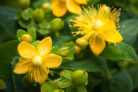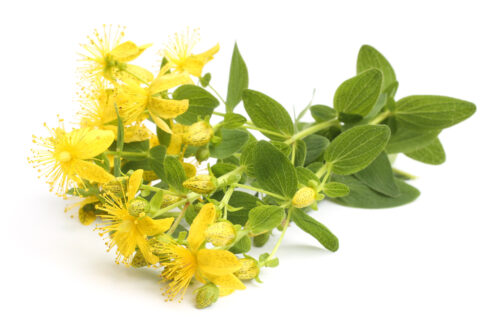
While those bright yellow flowers stealing the spotlight all summer long are definitely the main attraction, don’t let the foliage fade into the background! If you’re new to foraging, getting to know the leaves isn’t just a good idea—it’s actually the best way to make sure you’ve found the real deal.
St. John’s Wort is Deciduous
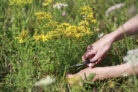
Common St. John’s Wort (the kind you’ll find growing wild) is a deciduous perennial. This means you’ll spot those green leaves from early spring straight through the fall. When you go to harvest the herb for its medicinal properties during its blooming season, the leaves come right along with the stems. They are actually one of your best tools for identifying the plant correctly.
What the Leaves Look Like
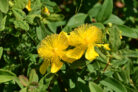
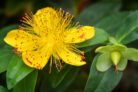
At first glance, the leaves are small and pretty simple. However, they have a few unique quirks that make them stand out if you know what to look for:
- They grow all the way up the stem (spaced about 1/2 to 1 inch apart).
- The leaves grow in opposite pairs.
- They sit directly on the stem without any little leaf stalks.
- Shape-wise, they are oval to oblong with rounded tips.
- They grow up to about an inch long.
- The texture is smooth, thin, and hairless, with “entire” (smooth) edges.
- They are a nice, classic medium green.
Those Famous “Perforated” Spots
Here’s the coolest part: if you hold a leaf up to the light, you’ll see tons of tiny translucent dots. These are actually oil glands, and they’re the reason the plant gets its Latin name, *Hypericum perforatum* (it looks like it’s been perforated!). You’ll also notice tiny black dots along the leaf margins.
How to Use the Leaves
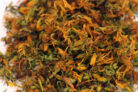
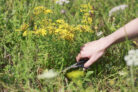
If you’re just after the leaves, the best time to forage is between April and June. They’re great for brewing tea or adding a unique flavor to infused spirits. You can even toss young leaves and tender shoots into salads from March to May. Once June hits and the flowers start popping up, most people harvest the entire upper stem. These bundles are perfect for air-drying to use later. And hey, if you want a steady supply of this natural mood-booster, it’s super easy to grow in your own garden!
Quick Tip:
Looking for a “cheat sheet” on this sunny medicinal herb? Check out our St. John’s Wort profile for all the essential facts.