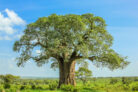
The Baobab tree gets its unique name from the fact that monkeys absolutely love its fruit. However, if you’re growing one at home, getting it to flower is a stroke of luck—and seeing it actually produce fruit is even rarer.
Flowers and Fruit Development
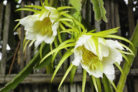
Starting around June, the Baobab begins to bloom. While the flowers are stunning to look at, they aren’t exactly “inviting.” Since carrion flies are among the tree’s natural pollinators, the blossoms don’t smell like roses—they actually give off a pretty unpleasant scent of rotting meat.
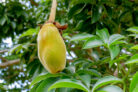
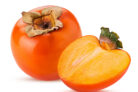
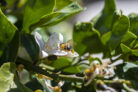
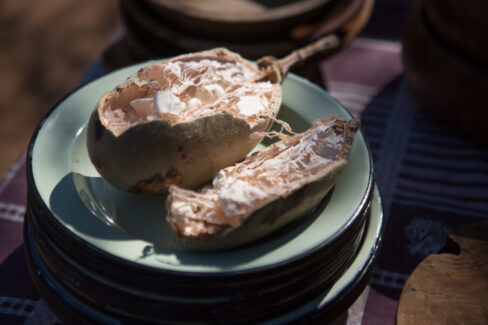
For fruit to develop, those flowers have to be pollinated. Once that happens, it takes up to eight months for the fruit to fully ripen. The heavy fruits hang down from the branches and are a favorite snack for monkeys. But they aren’t just for the animals; they’re perfectly safe (and healthy!) for humans to eat, too.
Using the Fruit
Baobab fruits are nutritional powerhouses, packed with protein and carbohydrates. You can eat the fruit raw or cooked, but you’ll need to remove the seeds and the fibrous bits first. Actually, almost the entire tree is edible! Baobab leaves are often dried and ground into a powder for various dishes, or used fresh just like spinach.
The fruit is even used to whip up drinks. In its native regions, the fruit is often fermented to make a beverage similar to beer. It’s not uncommon for locals and monkeys to get into a bit of a “dispute” over who gets to harvest the fruit first!
Growing from Seed
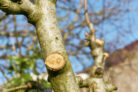
One way to propagate a Baobab is through cuttings. However, getting a tree to produce fruit at home is a massive challenge. Usually, only botanical gardens with year-round heated greenhouses manage to pull it off. But, if you happen to get your hands on some Baobab seeds—maybe as a souvenir from a trip—you can definitely try your luck at growing your own “Tree of Life” from scratch!