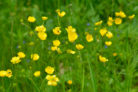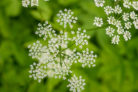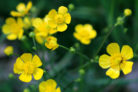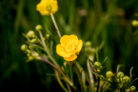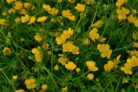
Ever wondered about the buttercup family? Known scientifically as *Ranunculaceae*, this group is packed with some of our favorite garden stars. But what exactly ties these plants together? Are there specific “tell-tale signs” you can look for? In this guide, we’re breaking down the unique characteristics of the buttercup family so you can spot them like a pro on your next nature walk or nursery visit.
Botanical Classification
The buttercup family (*Ranunculaceae*) belongs to the order *Ranunculales*, which is a subgroup of the broad category of flowering plants known as *Magnoliopsida*. With about 62 genera and roughly 2,525 different species, these plants have pretty much conquered the Northern Hemisphere. You’ll find them most often in temperate zones, where they really thrive in the cooler, seasonal weather.
Key Characteristics and Features
What to Look For
One of the coolest things about the buttercup family is the “indefinite” number of floral organs, often arranged in a spiral pattern. Because of this unique growth habit, it’s often the bracts (specialized leaves) rather than the calyx (the outer green part of a flower) that protect the delicate bud. Sometimes, “nectary leaves”—which actually evolved from stamens—take over that bodyguard duty!
Here are a few other visual cues to help you identify a member of the *Ranunculaceae* family:
- Mostly herbaceous (soft-stemmed) growth
- Some stems may become woody as they age
- Can appear as shrubs (like *Xanthorhiza*) or climbing vines (like *Clematis*)
- Leaves are usually arranged alternately along the stem
- Leaves are often deeply lobed or divided
- No stipules (those tiny appendages at the base of a leaf stalk)
While the flowers vary, they often appear in small clusters in the following forms:
- Panicles
- Racemes (spikes)
- Cymes
- Or as solitary blooms
Most buttercup relatives are hermaphroditic, meaning they have both male and female parts and can self-pollinate to keep the next generation going.
When it comes to fruit, this family is quite diverse, though they often look similar to the untrained eye. Depending on the species, you might see:
- Berries
- Capsules
- Achenes (tiny nut-like fruits)
- Or follicles
A Word of Caution: Toxicity
It’s important to note that almost all species in the buttercup family contain toxic compounds. These can be harmful to both humans and pets if ingested or sometimes even touched. Definitely keep this in mind if you’re planning to add them to a garden where curious kids or dogs play!
Subfamilies and Species
Curious about who’s who in this family? Here’s a quick breakdown of the subfamilies and some popular species:
Subfamilies
- Nigelleae
- Caltheae
- Anemoneae
- Adonideae
- Delphinieae
- Helleboreae
- Cimicifugeae
- Asteropyreae
- Callianthemeae
- Ranunculeae
Notable Species
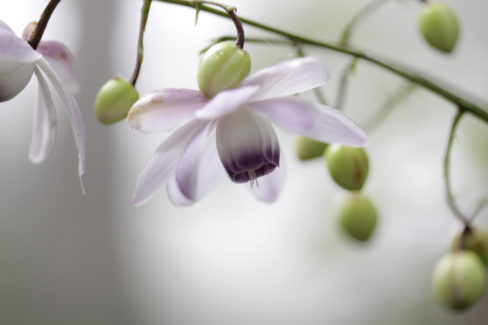
- False Anemone (*Anemonopsis macrophylla*)
- Tiny Mousetail (*Myosurus minimus*)
- False Rue-Anemone (*Isopyrum thalictroides*)
- Anemone-like Paraquilegia (*Paraquilegia anemonoides*)
- Lice-bane (*Delphinium staphisagria*)
- Goldenseal (*Hydrastis canadensis*)
- Field Fennel Flower (*Nigella arvensis*)
- Yellow Monkshood (*Aconitum anthora*)
- Alpine Delphinium (*Delphinium elatum*)
- Stinking Hellebore (*Helleborus foetidus*)
- Stemless Globeflower (*Trollius acaulis*)
- Marsh Marigold (*Caltha palustris*)
- Alpine Clematis (*Clematis alpina*)
- Alpine Pasqueflower (*Pulsatilla alpina*)
- Anemone-flowered Callianthemum (*Callianthemum anemonoides*)
- Yellowroot (*Xanthorhiza simplicissima*)
- Kerner’s Callianthemum (*Callianthemum kernerianum*)
- European Globeflower (*Trollius europaeus*)
- Greek Adonis (*Adonis cyllenea*)
- Baneberry (*Actaea spicata*)
Pro Tip: Keep an eye out for new hybrids! Plant breeders are constantly releasing new varieties, including some modern cultivars that are sterile, meaning they won’t aggressively self-seed and take over your garden beds.