Carnivorous plants are easily some of the most fascinating members of the plant kingdom. To get the nutrients they need to thrive, these clever growers actually hunt, catch, and digest insects. If you’re looking to add some “bite” to your plant collection, check out these seven popular carnivores—plus one stunning secret tip!
[[pflanzen]]
++Sundew (Drosera)
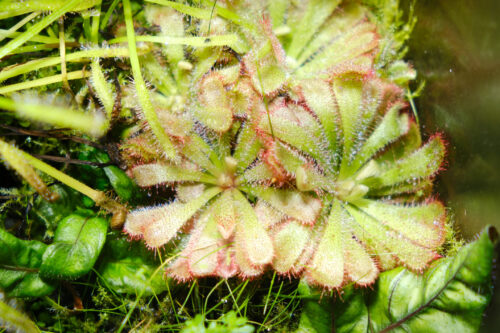
There are about 200 species of Sundew out there, and some can live for over 50 years, growing quite impressively over time. Depending on the variety, *Drosera* can grow in a low rosette, upright, or even as a climber. Their secret weapon? Leaves covered in tiny glandular hairs that produce glistening drops of sticky mucilage. These drops smell like sweet nectar to insects, but once a fly or beetle touches them, they’re stuck. The plant’s sensitive hairs then curl around the prey, and the entire leaf eventually folds over to digest the meal.
++Sun Pitcher (Heliamphora)
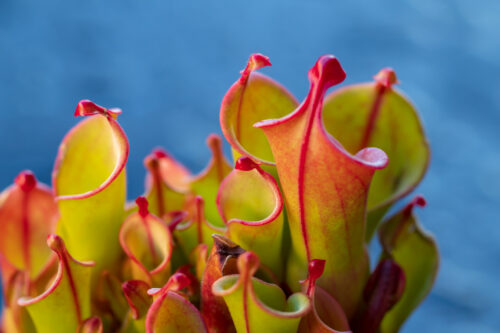
If you’re looking for something a bit more exotic, the Sun Pitcher is a true rarity. These plants grow in ground-level rosettes with unique, funnel-shaped pitchers rising from the center. They use a trail of nectar to lure beetles and other crawling bugs into the tube. The inside is lined with downward-pointing hairs, making it a one-way trip—once an insect falls in, it’s nearly impossible to climb back out. Interestingly, unlike many other carnivores, *Heliamphora* doesn’t produce its own digestive enzymes; it relies on helpful bacteria to break down its food.
++Waterwheel Plant (Aldrovanda vesiculosa)
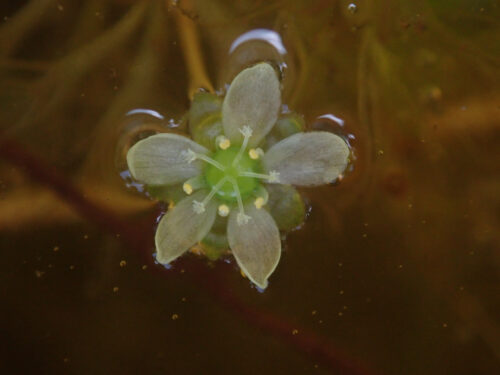
This carnivorous freshwater plant is a floating wonder, usually growing between four and twelve inches long. The Waterwheel plant drifts on the surface and grows small snap-traps along its stem. Much like a Venus Flytrap, it lures in mosquito larvae and water fleas. When a tiny creature brushes against the trigger hairs inside the trap, it snaps shut in an instant, and the plant begins its digestive process.
++North American Pitcher Plant (Sarracenia)
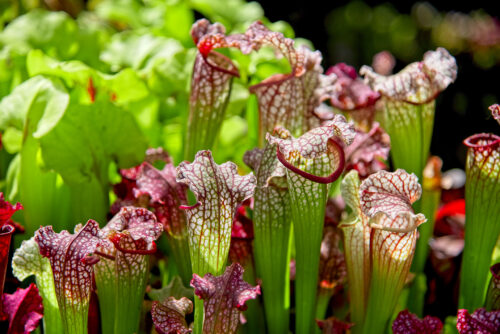
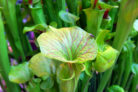
*Sarracenia* is one of the toughest carnivorous plants you can find. They are so hardy that they can survive freezing winters and are even found growing wild in parts of Canada. These plants form evergreen rosettes with leaves shaped like vertical tubes or pitchers. A hood-like leaf at the top produces nectar to attract bugs. Once an insect lands, it slips on the waxy surface and tumbles into the pitcher. Downward-pointing hairs prevent escape, and the plant’s enzymes do the rest.
++Tropical Pitcher Plant (Nepenthes Hybrids)
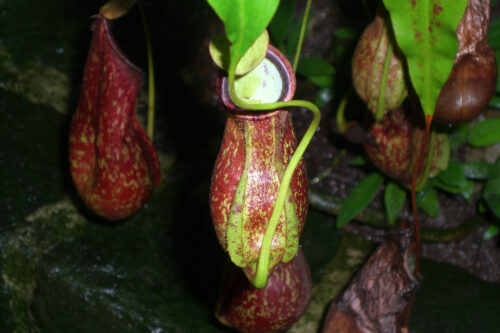
*Nepenthes* are famous for their spectacular hanging traps. These plants actually produce three types of leaves: thick foliage, vine-like tendrils, and the iconic pitchers. These passive traps can be huge—some hold up to two liters of fluid! Nectar around the rim (the peristome) attracts insects, while “wings” on the pitcher guide them toward the opening. The walls are so slippery that bugs slide right into a pool of highly acidic digestive juice at the bottom.
++Butterwort (Pinguicula)
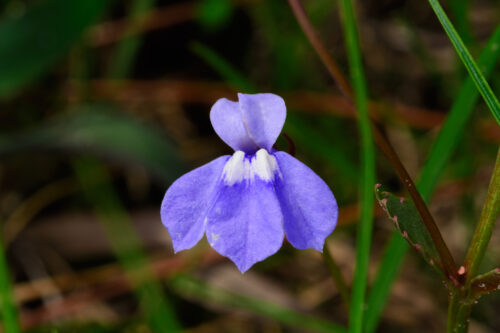
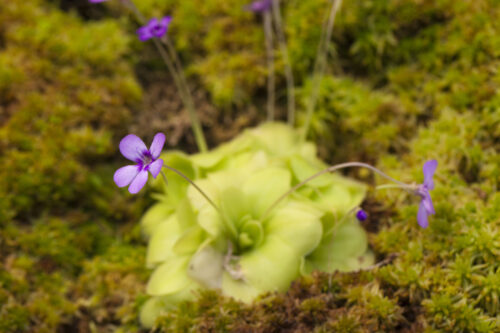
Butterworts are fantastic because many species are completely frost-hardy, making them great for outdoor bog gardens. They grow in pretty rosettes and produce lovely violet flowers from May through August. The leaves have a greasy, shimmering appearance (hence the name) caused by thousands of tiny glue-glands. Small insects are drawn to the scent, land on the “buttery” leaves, and get stuck. The plant then slightly curls its leaf edges and releases enzymes to break down the prey.
++Venus Flytrap (Dionaea muscipula)
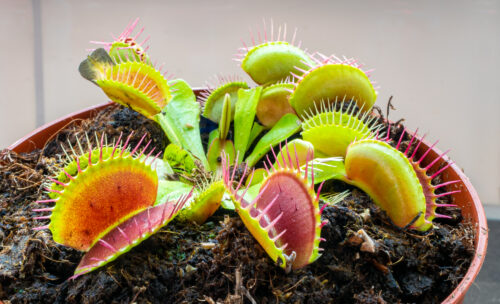
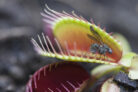
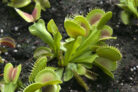
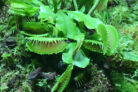
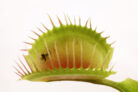
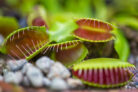
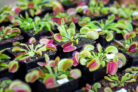
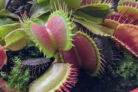
The Venus Flytrap is undoubtedly the superstar of the carnivorous world. It features specialized leaves with “teeth” along the edges. The bright red interior and sweet-smelling nectar are irresistible to bugs. When an insect crawls inside and touches the sensitive trigger hairs twice in quick succession, the trap slams shut in a fraction of a second, sealing the prey’s fate.
%%Rainbow Plant (Byblis)
Our secret tip is the stunning Rainbow Plant! Its name comes from the way sunlight hits the sticky droplets on its leaves, creating a shimmering rainbow effect. Beyond its sparkling traps, it produces delicate flowers in late spring that range from white to pink or purple. Almost the entire plant is covered in glandular hairs that secrete a massive amount of “glue.” When an insect lands, it becomes so heavily coated in slime that there is absolutely no chance of escape.