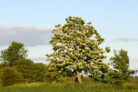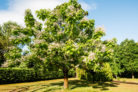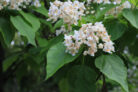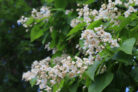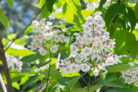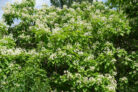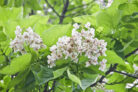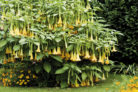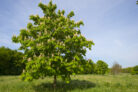
Originally hailing from right here in the States, the exotic Northern Catalpa (or Southern Catalpa, depending on where you live!) is a real showstopper in any backyard, mostly thanks to its stunning explosion of flowers. These little white blooms have some pretty unique features that make them worth a closer look.
What the Blooms Look Like
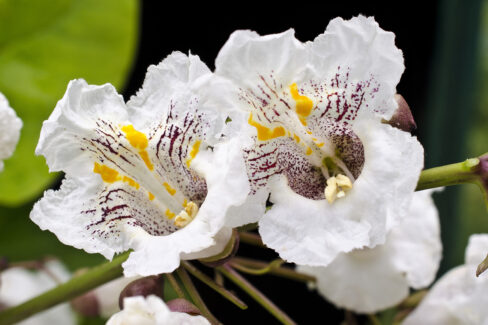
Up close, Catalpa flowers have a lovely bell-like shape. Each individual bloom can grow up to about 6 inches long, and they grow in big, showy clusters called panicles. This grouping is what gives the tree that incredibly lush, full look we all love.
While the petals are white on the outside, if you peek inside, you’ll see delicate yellow stripes and tiny purple spots. Because of this intricate detail, they actually look a lot like wild orchids!
When Do They Bloom?
The blooming season for the Catalpa is relatively short but sweet. You can expect to see these beauties lighting up your garden during the warm summer months of June and July.
A Splash of Color
Most Catalpa trees you’ll run into feature those classic white blossoms. However, there is one notable exception:
- The Yellow Catalpa (native to Asia), which, as the name suggests, trades the white petals for a soft yellow hue.
That Sweet, Subtle Scent
The flowers give off a very light fragrance. While it might be a bit too faint for us humans to notice most of the time, birds and insects absolutely love it. This is why the Catalpa is often called a “bee magnet.” Bees and bumblebees flock to the tree, doing the important work of pollination which eventually leads to those iconic long seed pods.
A Note on the Umbrella Catalpa
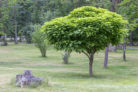
If you’re looking for that massive floral display, you might want to skip the Dwarf Globe or “Umbrella” Catalpa. Unlike its tall cousins, this compact variety rarely flowers—and if it does, it usually only happens once the tree is quite old. If flowers are your priority, stick with the standard varieties!
Protecting Your Future Flowers
Here’s a pro tip: the flower buds for next summer actually start forming in the fall of the previous year. This is super important to remember when you’re pruning your tree. If you get too aggressive with the shears, you might accidentally cut off next year’s show!
Also, if you’re in an area with particularly brutal winters, try to protect the crown of the tree from extreme frost. Those young buds are a bit sensitive and can freeze if the temperature drops too low, which would mean a much quieter summer in the garden.