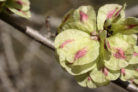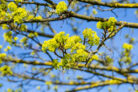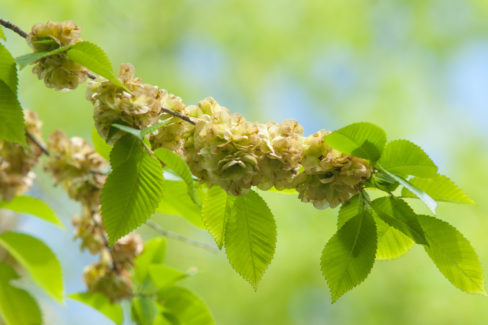
At first glance, elm blossoms are pretty easy to miss. They’re tiny, modest, and usually blend right in with their soft green or subtle purple hues. But don’t let their “wallflower” personality fool you! Along with the leaves, these blooms are actually one of the best ways to tell different elm species apart.
All About Elm Blossoms
While every elm species has its own unique flair, most elm flowers share a few common traits:
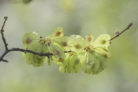
- They are incredibly small, usually measuring only about 1/8 to 1/4 of an inch (3 to 6 mm).
- Their colors are very understated, ranging from pale green to a dusty violet.
- Each individual flower is bell-shaped, and they typically grow in cozy little clusters.
Unique Quirks of the Elm
Elms aren’t exactly in a rush to grow up. A tree usually won’t reach “maturity” (meaning it’s ready to flower) until it’s between 30 and 40 years old. Even then, they don’t put on a show every year; most elms only bloom every second year. These flowers are hermaphroditic (containing both male and female parts) and rely on the wind to do the heavy lifting for pollination.
When Do They Bloom?
Elms are some of the earliest heralds of spring. In most cases, the flowers pop up before the new leaves even think about emerging. So, if you see a bare tree starting to look a little “fuzzy” in late winter or early spring, you’re likely looking at an elm in bloom!
Spotting the Differences Between Species
If you’re trying to identify an elm, looking at the flowers is just as helpful as checking out the leaves. Here’s how the blossoms differ among the three most common species found in Central Europe:
The European White Elm (Flatterulme)
This one is an early bird, blooming between February and April—well before the leaves appear. The flowers are green to light purple and are easily recognized by their notably long stems.
The Field Elm (Feldulme)
The Field Elm produces flowers that are predominantly male, featuring three to seven stamens and white stigmas. They bloom in March and April and, unlike the White Elm, have very short stems.
The Wych Elm (Bergulme)
The Wych Elm also joins the party in March and April. Its tiny flowers grow in a specific cluster called a cyme. The biggest giveaway for this species? The flowers are “sessile,” which is just a fancy gardening word for having no stem at all!