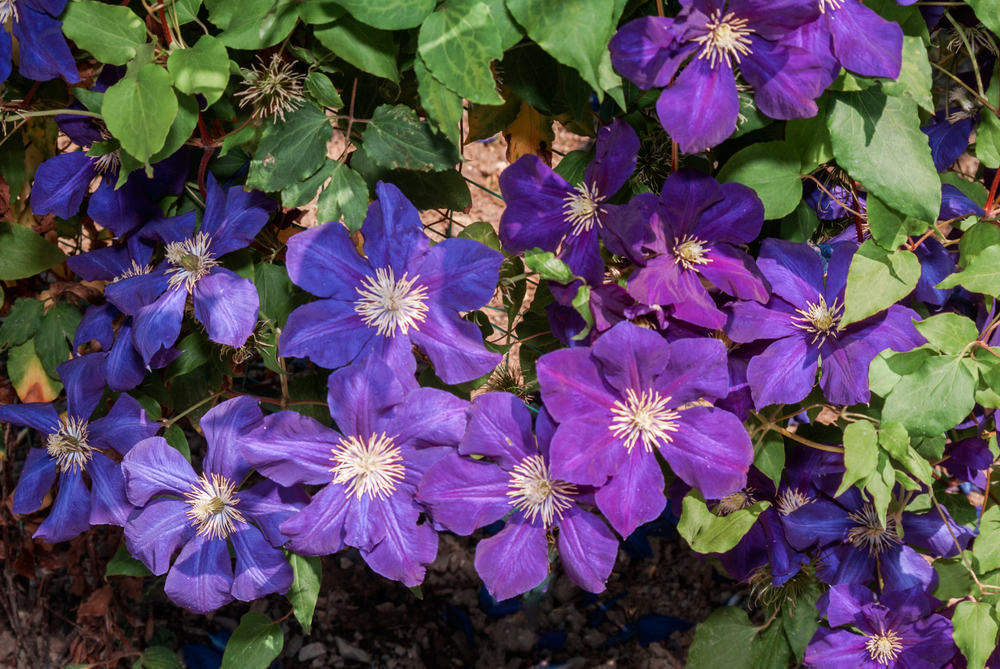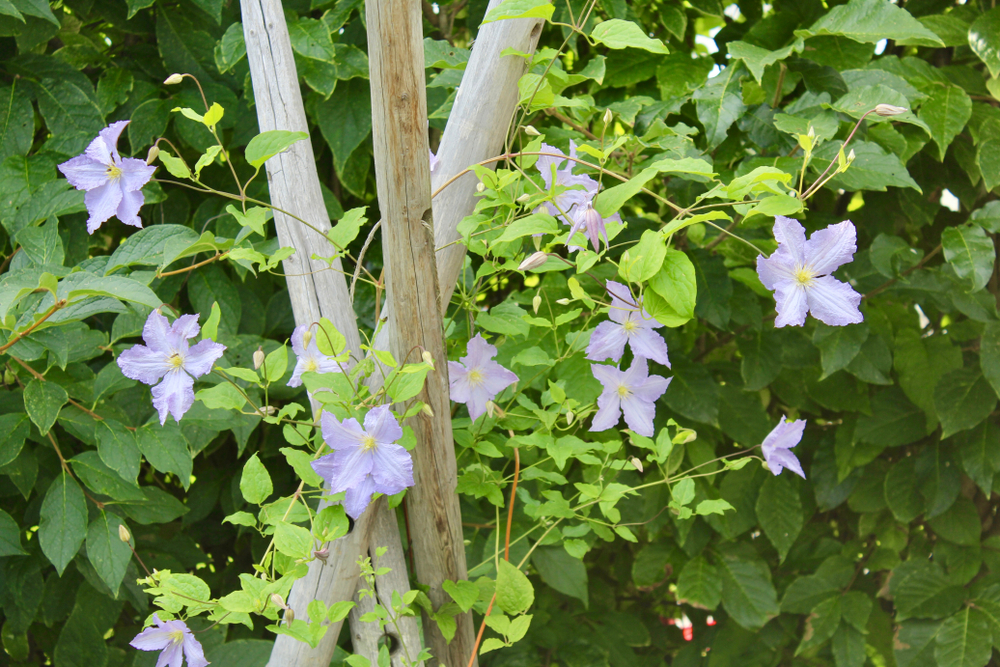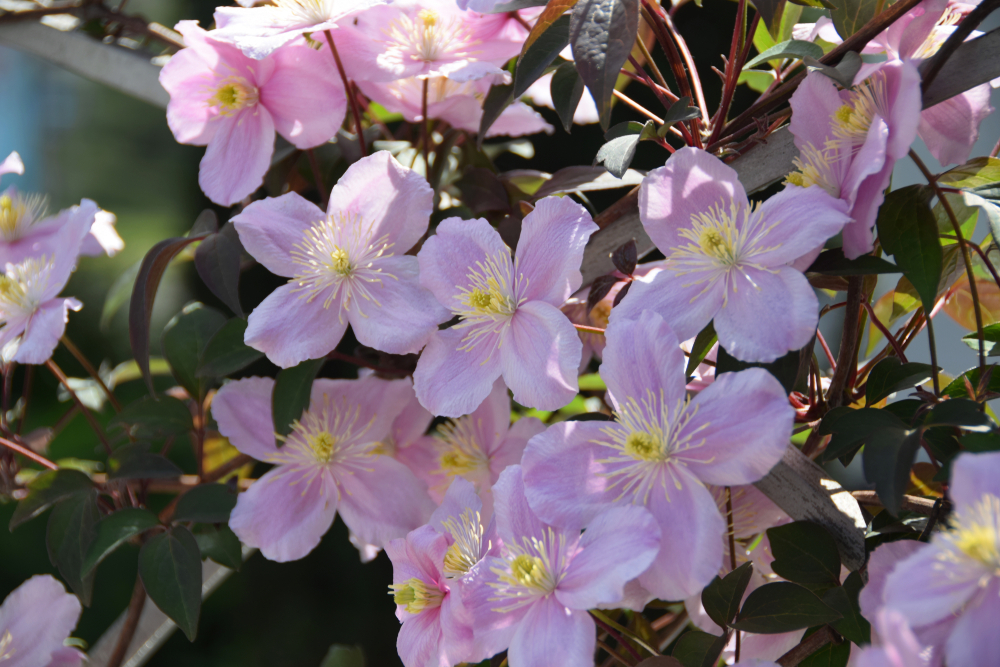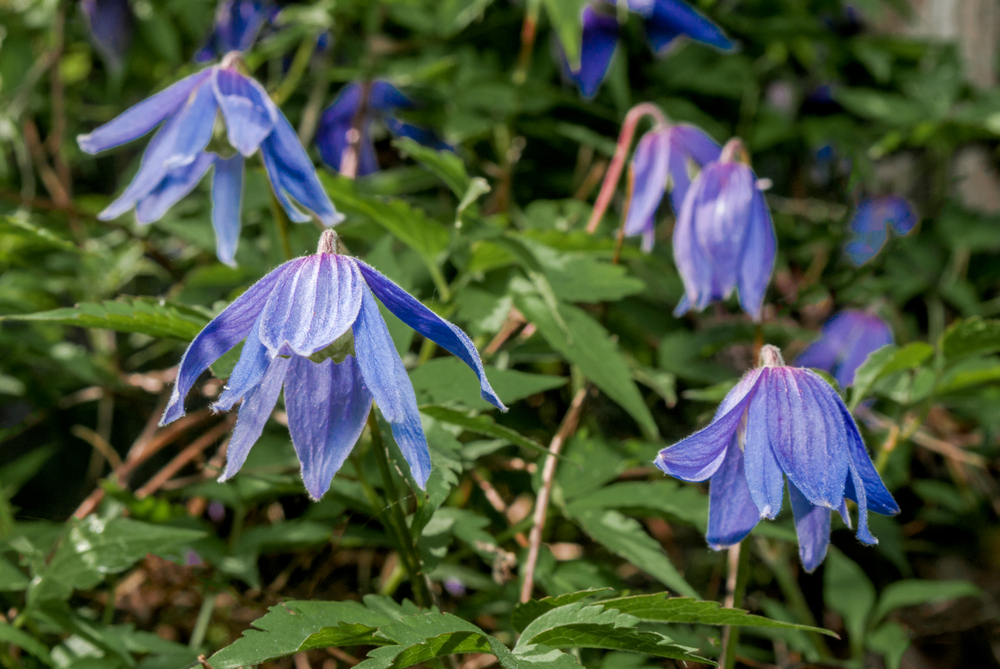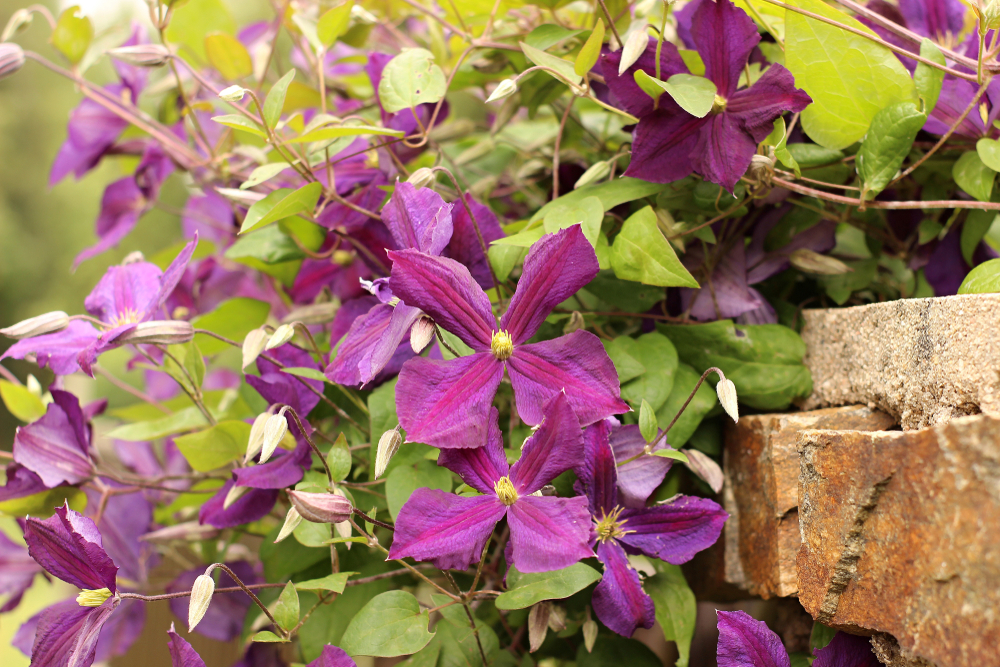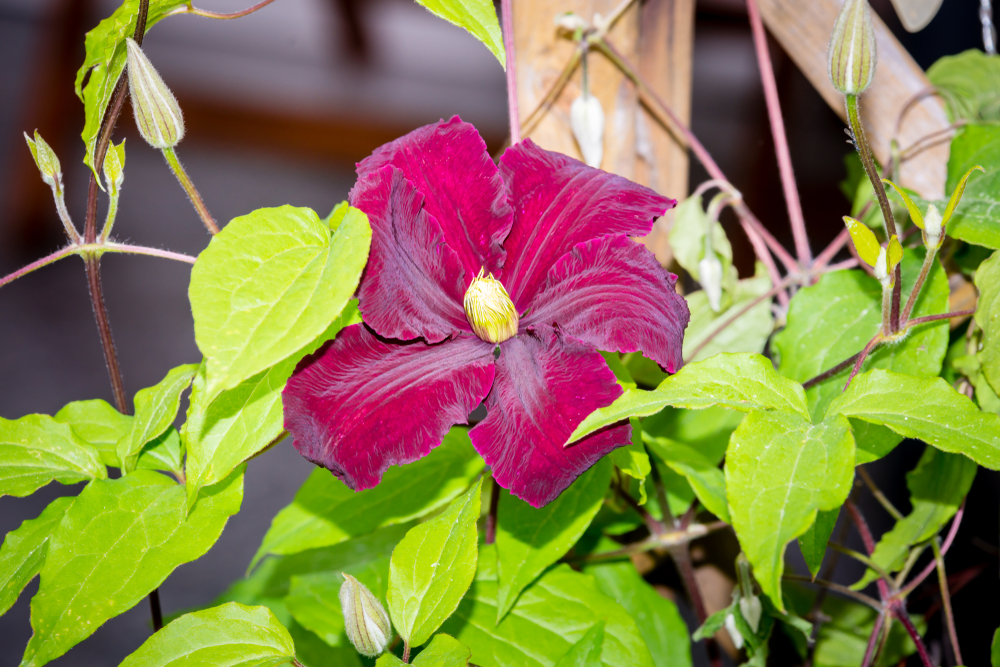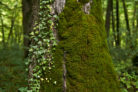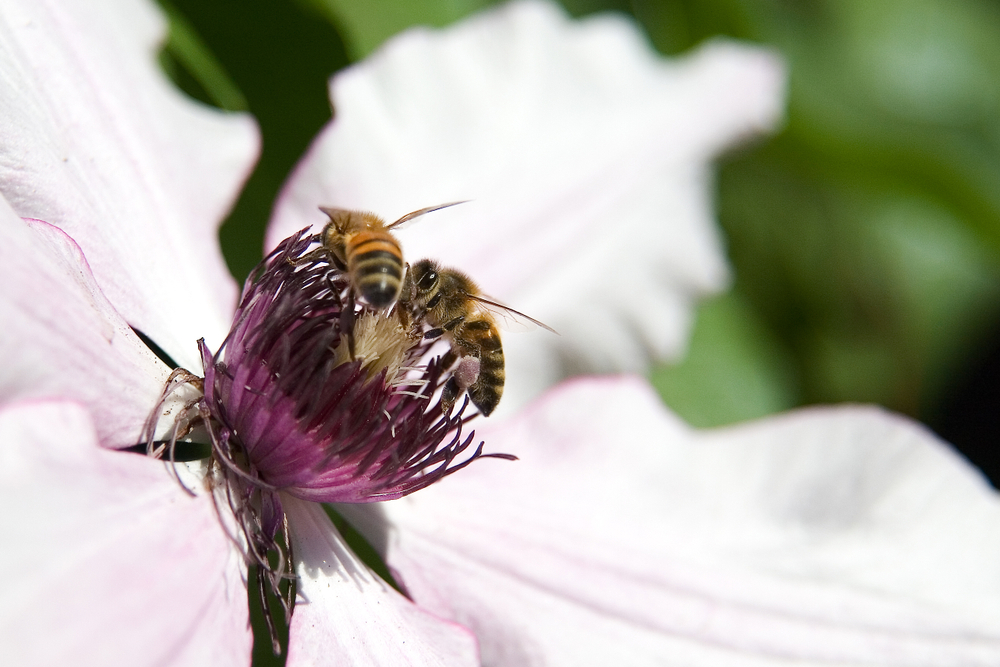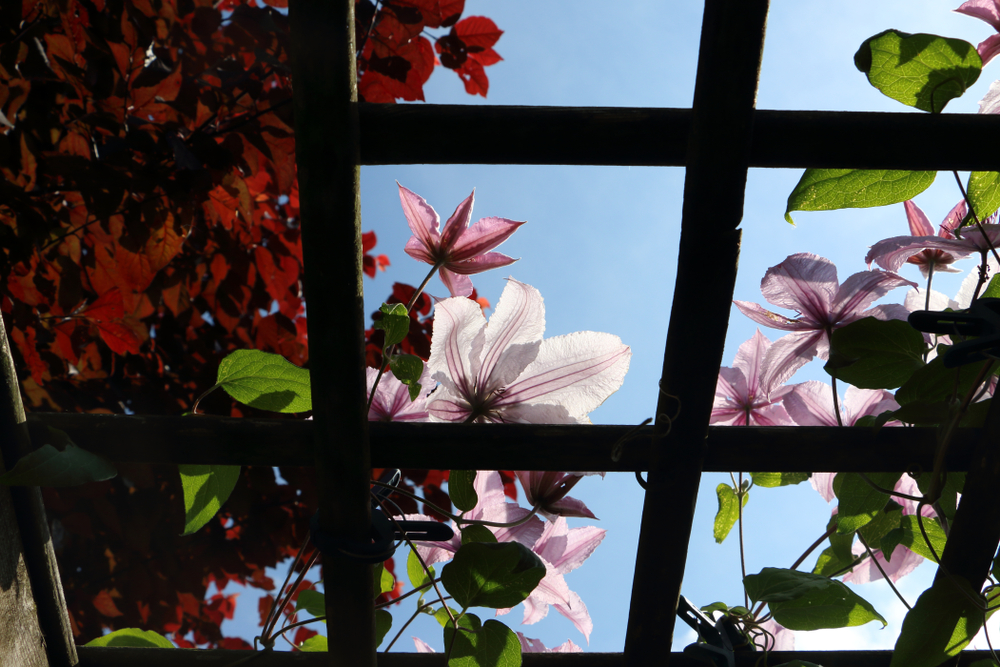
In the wild, you’ll usually spot Clematis growing along the edges of forests. This gives us a huge hint about what they love: “heads in the sun, feet in the shade.” When you’re picking a spot in your garden, the goal is to mimic those natural conditions as closely as possible.
Finding the Perfect Spot
If you’re planning to use your climbing vines to spruce up a wall or the side of your house, aim for a spot that faces southwest or west. If you’re growing them in containers on a patio, you can easily manage the light levels using an awning or a porch roof. For other varieties, take a look at the surrounding plants and try to tuck the Clematis in where it fits the vibe. Another pro tip? Plant some low-growing friends like nasturtiums (the non-climbing kind) or coral bells around the base. They act as a living mulch, keeping the Clematis roots nice and cool while the vines reach for the sunshine.