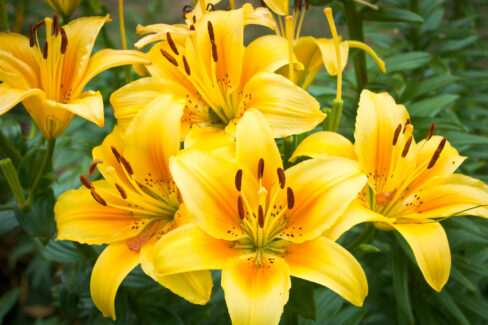
Taking care of daylilies is one of the most rewarding jobs for any home gardener. Not only are these plants stunning, but they’re also incredibly low-maintenance. However, every once in a while, your daylilies will need a little “tough love” in the form of division to keep them looking their best.
Why You Should Divide Your Daylilies
Even though daylilies are famous for being easygoing, they shouldn’t just be left to their own devices forever. Even if you’re doing everything right, you might notice that spectacular flower show starting to fade over the years. If an extra dose of fertilizer isn’t doing the trick anymore, it’s time to grab your garden tools. The best part about dividing them? Not only does the original plant get a second wind, but it’s also the easiest way to propagate them. This allows you to grow true-to-type clones of your favorite varieties all over your yard.
The best time to divide your daylilies is when they aren’t in the middle of a growth spurt. I recommend heading out to the garden either in early spring before the new shoots pop up, or in the fall once the blooming season is over. This timing gives the plant the best chance to recover and thrive.
How to Get the Job Done
To propagate your daylilies through division, start by picking out a healthy, established mother plant. First, trim the leaves down to about six inches. This makes the whole process much easier because you can actually see what you’re doing around the root zone. Next, carefully dig up the root ball and shake off any excess dirt.
Now, take a sharp knife and divide the roots with a clean, vertical cut. A good rule of thumb is to make sure each new section is roughly the size of your fist. Once you have your sections, you’re just a few steps away from success:
- Plant your new root sections about 20 inches apart to give them room to grow.
- Make sure they aren’t too deep—about one to two inches below the surface is perfect.
- Pick a spot that gets plenty of sun or at least partial shade.
- Use a high-quality soil or substrate that drains well.
- Give your new plants a good soak and keep watering them regularly for the first two weeks.