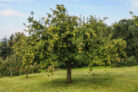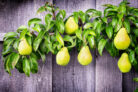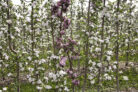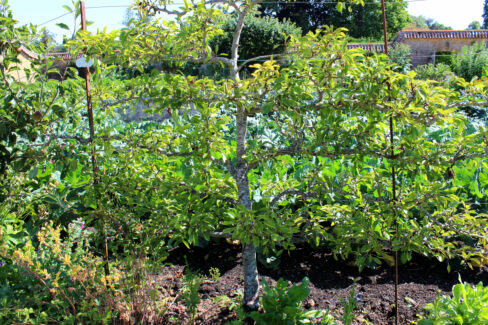
Apple, cherry, and plum trees come in all sorts of shapes, sizes, and varieties. Before you dig a hole, it’s a great idea to do a little homework on which tree form actually fits your garden’s layout and size.
Espaliers: Perfect for Walls and Living Fences
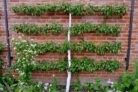
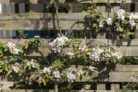
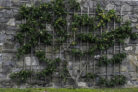
If you’re short on space but want big harvests, an espalier is the way to go. These trees are trained to grow flat against a wall or fence, with branches usually extending at 90-degree angles. It’s a super attractive, compact look that starts producing fruit fast—often by the second year! These beauties can live for 30 to 40 years and reach heights of up to 11.5 feet. You can train them as “slanted espaliers” or even in a “U-shape,” where a short trunk leads to horizontal branches that eventually turn upward.
Best Apple Varieties for Espaliers
For the best results with apple espaliers, look for trees grafted onto M9 or M26 rootstocks. These are specifically suited for this type of training.
Pro Tips for Success
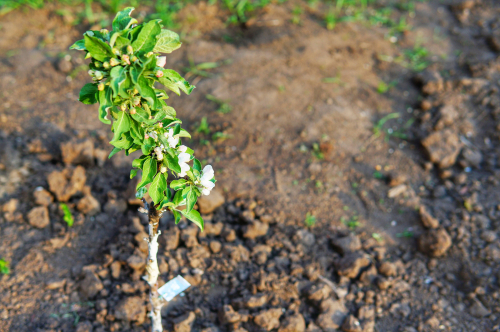
- Clear the base: Create a “tree island” about 3 feet in diameter around the trunk. Keep this area free of grass and weeds so the tree doesn’t have to compete for nutrients.
- Support is key: Espaliers need a sturdy trellis or frame to grow on.
- Tie it right: Use hollow plastic cord, raffia, or coconut fiber twine for tying the branches. Avoid thin wire or harsh string that can cut into the wood as the tree grows.
- Thin the fruit: If your tree is overloaded, don’t be afraid to pluck some young fruit off. This prevents the tree from exhausting itself and ensures it has enough energy to grow flower buds for next year’s harvest.
Pruning Basics
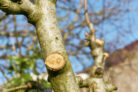
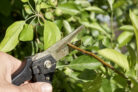
When it comes to espaliers, you’ll want to focus on summer pruning rather than winter pruning. This helps keep the tree’s vigor in check and maintains that tidy shape.
Pruning in June and July
In June, cut back new shoots to about 8 buds. The top 3 or 4 buds will usually develop into new shoots. If the tree is growing like crazy, you can head back those new shoots to 5 buds in mid-July.
Pruning in August
By mid-August, you can prune back to 4 buds below the first branch. These 4 buds are usually where your flower buds will form. You can leave short shoots (those with fewer than 8 buds) alone, as these naturally develop flowers and fruit early on. Also, keep an eye out for “competitor shoots”—those aggressive vertical branches growing right under the main lead. You can actually just pull those out by hand while they’re still soft in June (a technique called “summer ripping”).