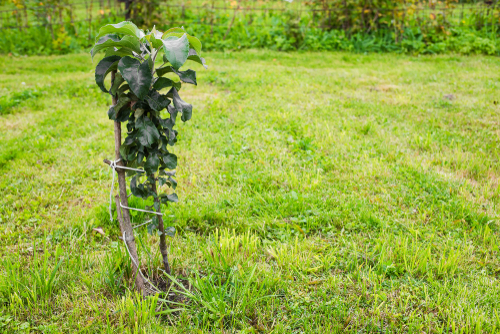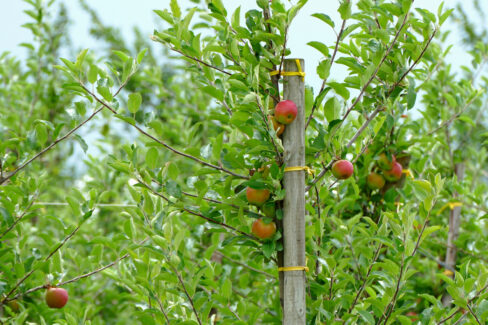
Ever wonder why pro gardeners always stake and tie their apple trees? It’s not just for looks! Getting your tree properly secured is the secret to helping it settle into its new home. With the right materials and a little know-how, you can make sure your apple tree grows strong and healthy from day one.
Why a stake alone isn’t enough
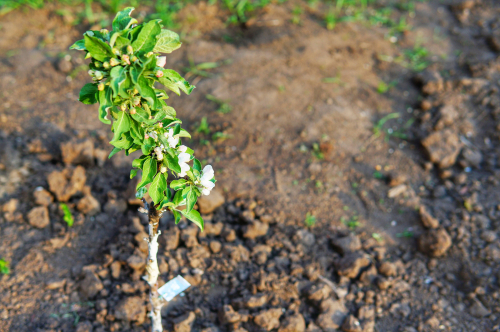
Most backyard gardeners know that a sturdy stake is a must-have when planting a new apple tree—mostly because nobody wants to see their hard work blown over by a storm. But there’s actually a bigger danger lurking in those gusty winds, especially during the summer when the tree is full of leaves. High winds create a “lever effect” between the leafy canopy and the roots. If the trunk isn’t tied securely, it wiggles, which snaps those tiny, delicate feeder roots underground. This prevents the tree from drinking enough water during the summer heat and, in the worst cases, can keep it from establishing at all.
A quick heads-up on coconut fiber rope
You’ll see coconut fiber rope (coir) marketed everywhere for tying fruit trees, and plenty of folks love the natural look. To keep the tree from rubbing against the stake, gardeners often twist the rope several times to create a spacer. The problem? If that rope is wrapped too tight against the bark, it creates damp spots that don’t dry out after a rain. These “moisture pockets” are an open invitation for fungal infections like apple canker. If you do choose coconut rope, make sure to check it at least once a year (twice is better!) to ensure it isn’t strangling the trunk as the tree grows.
When your tree needs a little extra help
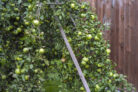
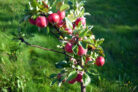
Sometimes, it’s not the wind you have to worry about—it’s the harvest! If your tree is having a “bumper crop” year, the weight of all that fruit can actually snap the branches. When things get heavy, you’ll want to thin out the fruit and provide some extra support. For lower branches, you can use a sturdy notched pole or a “Y” shaped stake to prop them up from the ground. If a high-up branch is sagging, your best bet is to carefully tie it to the central leader (the main trunk) using a soft tie or coconut band to take the pressure off.