Seeing a Ginkgo tree in bloom or spotting its fruit is actually a bit of a rare treat! These trees aren’t in any rush; they only start producing flowers and fruit once they’ve reached a certain age and have the perfect growing conditions.
Male Flowers
Ginkgo trees are “dioecious,” which is just a fancy way of saying that male and female flowers grow on separate trees. If you have a male tree, you’ll start seeing action as early as March. The male flowers look a lot like the catkins you’d see on a willow tree. If you take a close look at our Ginkgo fact sheet, you’ll see the resemblance—these male catkins can grow up to about an inch long.
Female Flowers
On the flip side, the blooms on female trees are so subtle you might miss them if you aren’t looking closely. They’re green and look a bit like tiny, unripe acorns. Since they don’t have showy petals, they blend right in with the foliage. However, if you look really closely, you’ll notice a thickened ovary at the base, which gives you a little preview of what the fruit will eventually look like.
To make sure pollination is successful, nature staggers the timing: female flowers usually show up about one to two weeks after the males, typically appearing in late March or early April.
The “Stinky” Fruit Situation
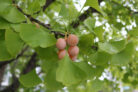
If you’re hoping to see Ginkgo fruit, you’re going to need a pair—at least one male and one female tree nearby. The female flowers have to be pollinated to develop fruit; otherwise, they’ll just drop off the branch.
But here’s the kicker: you’ll need plenty of patience. A Ginkgo tree usually won’t bloom for the first time until it’s about 20 years old. In many cases, it can even take up to 36 years before the tree is mature enough to show off its first flowers!