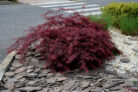
Shade-loving ground covers are the unsung heroes of the garden. They fill those tricky gaps under large trees and create lush, green carpets in front of north-facing walls where grass just won’t grow. Today, I’m sharing some of the most popular ground covers for shade, plus my personal “pro tip” for a low-maintenance landscape.
[[plants]]
++Bigroot Geranium (Geranium macrorrhizum)
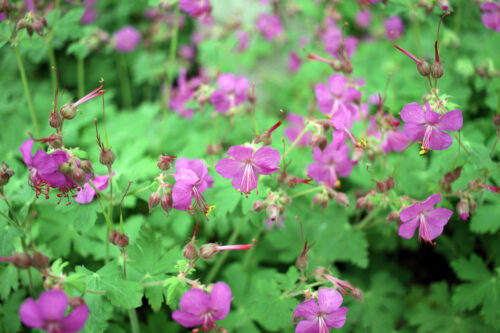
The Bigroot Geranium is a fantastic choice for planting under shrubs and trees because it’s incredibly tough. It grows in dense mounds about 18 inches high, making it nearly impossible for weeds to poke through. This semi-evergreen perennial has fuzzy, rounded leaves that release a lovely spicy scent when touched. From May to June, you’ll see clusters of pretty flowers in shades of white, pink, or purple, depending on which variety you pick.
++Japanese Sedge (Carex morrowii)
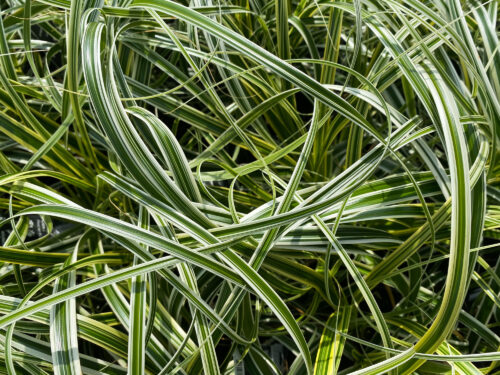
If you love the look of grass but have too much shade, Japanese Sedge is your best friend. This ornamental grass has a wide, mounding habit that works perfectly as a ground cover. Mature clumps can reach up to three feet across and about 16 inches high. Its arching, leathery leaves are a deep, glossy green that adds a touch of elegance to any dark corner.
++European Wild Ginger (Asarum europaeum)
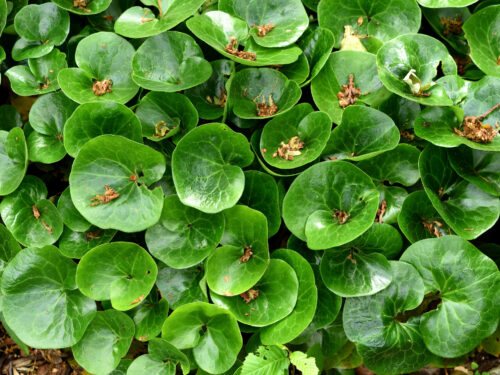
This slow-grower creates a stunning, low-profile carpet (only 2 to 4 inches high) with its glossy, kidney-shaped leaves. In early spring, it produces unique bell-shaped, brownish-purple flowers that hide right under the foliage. It has a mild peppery scent that—fun fact—voles and dogs usually dislike! Just a heads-up: Wild Ginger is toxic and was actually used as a potent emetic back in the day, so keep it away from curious nibblers.
++Periwinkle (Vinca)
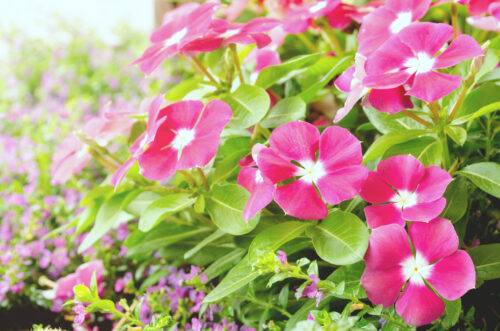
Commonly known as Vinca, this plant is actually a sub-shrub because its stems turn woody over time. It’s a classic for a reason: the leathery, dark green leaves stay on the plant all year long. From April through September, it shows off charming white, blue, or violet flowers. If you look closely at the petals, they’re shaped like little propellers—nature’s own garden art!
++Corydalis (Corydalis flexuosa)
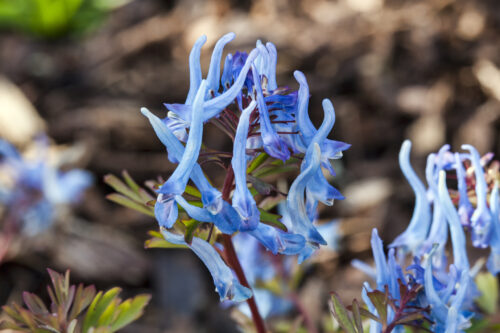
This adaptable ground cover is a real showstopper, producing beautiful spurred flowers in shades of yellow or electric blue from spring through fall. The foliage is just as pretty—delicate, deeply lobed, and very dense. Depending on the variety, it grows between 4 and 16 inches tall, making it a versatile choice for filling in the space beneath taller garden plants.
++Bugleweed (Ajuga reptans)
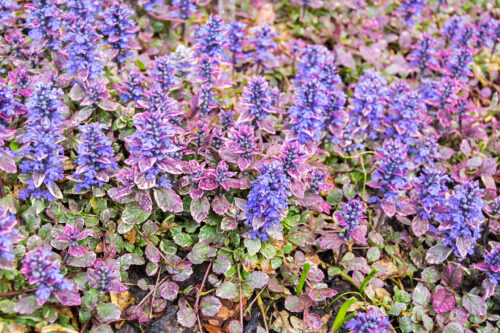
If you need something that grows fast and requires almost zero effort, Bugleweed is the way to go. Its evergreen leaves have a cool metallic sheen and come in shades of green, bronze, or deep purple. Bugleweed sends up flower spikes about 8 inches tall packed with blue, pink, or white blossoms. Because it blooms early, it’s a vital nectar source for bees and butterflies waking up in the spring.
++Barrenwort (Epimedium)
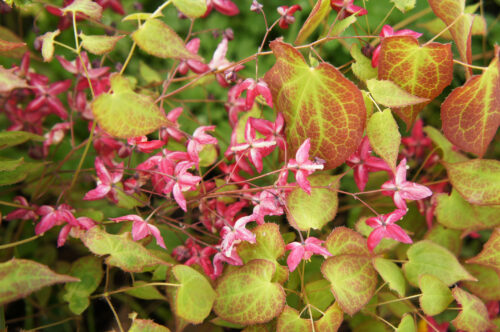
Also known as “Fairy Wings,” this plant features gorgeous heart-shaped leaves that often turn a bronze or reddish hue in the spring and fall. When it blooms in the springtime, the tiny white, yellow, or pink flowers look like they’re floating on thin, invisible wires above the leaves. It spreads via rhizomes, eventually forming a thick, weed-smothering mat.
%%English Ivy (Hedera helix)
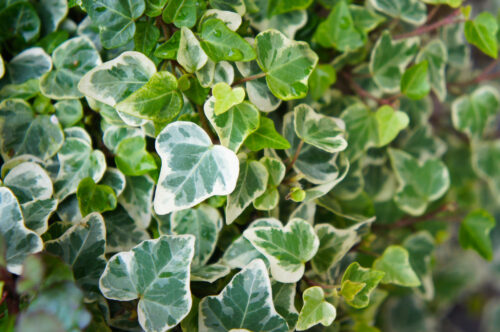
English Ivy is my secret weapon for the deepest shade. It creates a thick, evergreen carpet so dense that weeds don’t stand a chance. It’s incredibly hardy and will grow in those “impossible” spots where nothing else survives. Beyond its classic look, ivy is a late-season hero for local wildlife; its late blooms provide a much-needed food source for bees and hoverflies when other flowers have faded.