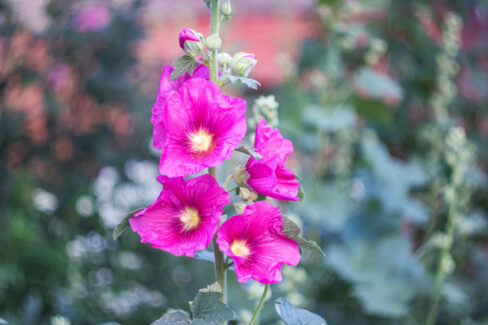
If certain fungal infections hitch a ride on your hollyhocks, those gorgeous, towering blooms can fade away faster than you’d like. Over time, these fungi sap the plant’s energy and keep spreading if left unchecked. But don’t worry—it doesn’t have to be game over for your garden! Here is the lowdown on how to spot the trouble and what to do if your plants get sick.
Hollyhock Rust and Wilt Disease
There are two main culprits that usually bother hollyhocks: Rust and Wilt. Both are caused by fungi that settle in and slowly take over the plant. Luckily, you can usually spot an infection early by keeping an eye on your hollyhock leaves.
What to look for:
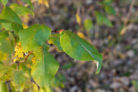
- Yellow or brownish spots on the tops of the leaves.
- Hollyhock Rust: Reddish-orange spots or pustules on the undersides of the leaves.
- Wilt: Pustule-like spore clusters on the undersides of the leaves.
With Hollyhock Rust, you’ll see those yellow spots on top first, followed by reddish discolorations underneath that look exactly like—you guessed it—rust. Wilt looks similar with the yellow/brown tops, but you’ll notice brown, pore-like coatings on the bottom of the leaves.
How to Save Your Infected Hollyhocks
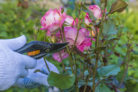
The only way to kick the fungus to the curb is to prune away every single infected part of the plant. If the infection is really bad, it’s a good idea to scrape away the top layer of soil around the planting site and replace it with fresh dirt. If you manage to remove all traces of the fungus, your plant has a great shot at bouncing back. Just a heads-up: Hollyhock Rust is usually much easier to beat than Wilt.
When you’re ready to start pruning, grab some garden gloves and a sharp, clean pair of shears. I always recommend disinfecting your blades before you start to keep things sterile. Cut the plant back well into the healthy tissue, making sure you’ve removed anything that looks suspicious.
Pro tip: Never throw infected clippings onto your compost pile! The fungus will just hang out there and spread through your garden later. Instead, burn the clippings or seal them up in a trash bag for disposal.
How to keep your plants healthy from the start:
- Pick a sunny spot with plenty of airflow.
- Make sure you are fertilizing correctly.
- Try a preventative spray like horsetail tea (it’s a great natural strengthener!).