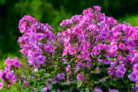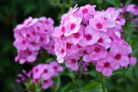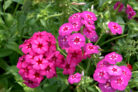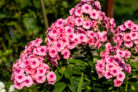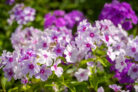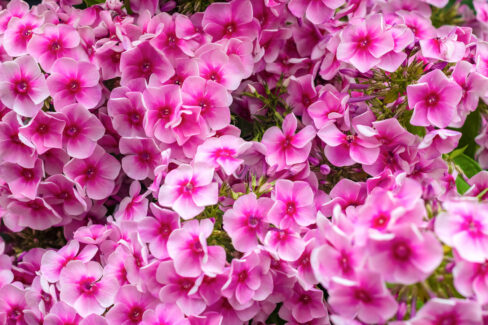
While phlox is generally a pretty hardy addition to the garden, it’s not totally invincible when it comes to diseases. The key to keeping your garden looking great is knowing how to spot trouble early so you can jump in and save the day.
Common Diseases to Watch Out For in Your Phlox
Because there are so many different varieties of phlox (or “flame flowers,” as some call them), some are naturally more “tough” than others. You can give your plants a major head start by picking the right spot in your yard, keeping a steady watering schedule, and using the right fertilizer. A strong, healthy plant is always the best defense against pests and fungus!
Here are the main culprits that might bother your phlox:
- Powdery Mildew (Fungus)
- Nematodes (Roundworms)
- Leaf Curl (Virus)
- Leaf Spot (Fungus)
Dealing with Powdery Mildew on Phlox
Powdery mildew is pretty easy to spot—it looks like someone dusted your leaves with white or gray flour. If you see it, your best bet is to prune away the affected parts immediately. If the fungus has already taken over the whole plant, you might have to pull it out entirely to keep it from spreading to your other garden favorites.
How to Get Rid of Nematodes
Nematodes, also known as eelworms, are tiny roundworms that travel through water and soil to get to your plants. A cool trick to see if you have them is to crush a leaf and drop it into a glass of water—you’ll see them wiggle out. You can also tell they’re around if the leaves look “glassy” or eaten away, eventually turning into brown spots.
To keep these little guys in check, cut off any infested leaves and stems. Try to keep the soil on the drier side for a few weeks. If the soil is heavily infested, you’ll unfortunately have to remove the phlox and let that patch of dirt dry out completely for a while.
Managing Leaf Curl Virus
You’ll know you’re dealing with Leaf Curl if the leaves start twisting up and showing dark brown or black spots. The surface of the leaves might even look shiny (like lacquer) or feel unusually rough. Sadly, there’s no real cure for this virus—the best thing to do is remove the entire plant and dispose of it (burning is best if your local laws allow it) to protect the rest of your garden.
Treating Leaf Spot Disease
Leaf spot shows up as yellow, brown, or even reddish dots on your phlox. This fungus absolutely loves damp, humid conditions. To fix it, trim away any spotted leaves to improve airflow. For a little extra protection, you can treat your plants with a copper sulfate solution to keep the fungus from coming back.