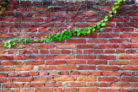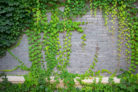
There’s something undeniably romantic about a wall covered in lush, green ivy. But beyond the aesthetic vibes, recent studies show that this thick climber is actually a great natural insulator—keeping your home cool in the summer and adding a layer of warmth in the winter. However, for this partnership to work long-term, you need to make sure your ivy and your walls are a perfect match.
Make sure your wall is in tip-top shape
Ivy climbs by using tiny aerial rootlets that act like little anchors, gripping the surface as it heads upward. If those roots find a crack, a loose brick, or a hole, they’re going to crawl right in. As these roots grow thicker and stronger over time, they’ll inevitably expand those cracks. In the worst-case scenario, this can compromise the structural integrity of the wall or let unwanted moisture seep in.
Before you let your ivy start climbing, give your wall a very thorough inspection. It needs to be 100% solid. Any damage should be professionally repaired before planting. Also, keep in mind that wooden structures aren’t the best choice, as they can rot over time under the dense foliage.
Pro Tip:
Your wall shouldn’t be perfectly smooth. A slightly textured or roughened surface helps the ivy get a much better grip.
Ivy has a thing for dark colors
Believe it or not, ivy is a bit picky about its climbing surface. Once it touches a facade it likes, it starts developing those suction-like roots. Since young ivy is a huge fan of the shade, it’s usually not a big fan of bright, white walls. Light-colored surfaces reflect too much light, which can actually cause the plant to grow away from the wall.
To keep your ivy happy:
- Choose a dark-colored wall
- Or give the area a coat of dark paint before planting
Regular pruning is a must
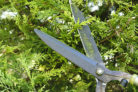
Ivy is a bit of a “slow starter.” But after about 2 or 3 years, it really hits its stride and starts growing like crazy. At that point, you’ll need to keep it in check with a good pair of shears. Pruning is a regular chore you’ll need to tackle at least once a year—honestly, maybe even more. If you let it go wild, you might run into these issues:
- The ivy reaches the roof and can actually loosen your shingles.
- It starts sending out runners at the base, taking over your garden beds.
- It can completely cover windows, blocking out all your natural light.
- If the wall is on a property line, it’ll definitely try to move in with the neighbors.
Think about the “breakup”
Before you commit to this climbing beauty, take a moment to research how to remove ivy from a wall. It is a labor-intensive process, and it’s notoriously difficult to get the surface looking brand new again once the ivy is gone.