No matter how big your yard is, there eventually comes a day when you have to grab the shears to keep your ivy in check. This stuff grows fast, and the second it touches the ground, it starts putting down new roots. If you aren’t careful, it can start looking a lot like a weed! But beyond just keeping things tidy, there are plenty of great reasons to give your ivy a regular trim.
Ivy is incredibly resilient
When it’s time to prune, don’t be shy. You don’t need to worry about being too delicate or following complicated rules. You can pretty much cut back anything that looks out of place, and the ivy will bounce right back. It handles multiple trims a year without a problem, and any little “mistakes” you make will be covered up by new growth before you know it.
The older the ivy, the more you’ll need to prune
When you first plant ivy, it might seem a little slow to get going. It usually takes about 2 to 3 years before it really hits its growth spurt. Don’t worry—it’s just taking some time to get settled into its new spot. While there won’t be much to cut at first, regular light pruning during these early years actually helps the plant grow in thicker and more branched out.
Once that ivy is in “full throttle” mode, you have to stay on top of it, or it will quickly take over and turn into a weed. Those vines can grow up to 3 feet a year! A quick tip: only fertilize your ivy if the soil is really depleted; otherwise, you’re just giving it more fuel to grow even faster.
When is the best time to prune?
Since ivy is an evergreen, you can technically prune it any day of the year as long as it’s not freezing outside. However, seasoned gardeners have found that certain times work better than others. Also, keep an eye out for nesting birds in larger hedges—it’s always best (and often legally required) to avoid major hacking between March and September to protect our feathered friends.
- Spring: Best for shaping and major rejuvenation.
- Summer: Ideal for light maintenance and “haircuts.”
Tools of the trade
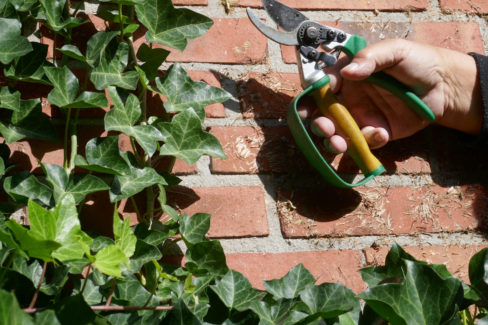
Always make sure your tools are sharp and clean. The right tool depends on how thick those vines have become:
- Standard hand pruners (bypass shears)
- Loppers (for thicker woody stems)
- A small hand saw (for the really old stuff)
If your ivy has climbed high up a wall, make sure you have a sturdy, secure ladder. And don’t forget: wear long sleeves and gloves! Ivy is toxic and can be a skin irritant for many people.
Pro Tip: Cutting ivy can release tiny particles into the air. If you’re doing a big job, it’s a smart move to wear safety goggles and a dust mask.
The Spring Shape-Up
How you prune depends on where the ivy is growing. You’ll want to pay extra attention to ivy growing on a house wall. It needs regular check-ups to make sure it isn’t getting into the brickwork or eaves.
- Prune between late January and late February.
- Pick a frost-free, overcast day.
- Remove any dead or awkwardly placed vines.
- Trim back long runners on groundcover and climbing varieties.
- Cut back hedges or wall-climbers to your desired height.
- For green walls: make sure to clear plenty of space around windows and doors.
Summer Maintenance
For a summer trim, choose a cloudy day that isn’t too hot. If you prune in the scorching sun, the leaves that were previously hidden in the shade can actually get sunburned. If you have to do it on a sunny day, try to provide some temporary shade for the plant.
- Prune between late June and mid-July (or in August).
- Focus on cutting back only the new growth from this year.
- Snip off any “rogue” vines that are sticking out.
Revitalizing an overgrown mess
If you have an old ivy plant that hasn’t been touched in years, you can give it a total makeover. Between January and March, you can do a radical “hard prune.” If necessary, you can cut the whole thing back almost to the main root stock. Just be patient—it will eventually sprout fresh new growth from “sleeping” buds.
Pro Tip: If you have ivy in its adult phase, regular pruning actually encourages it to produce more flowers during its blooming season.
Trimming an Ivy Hedge
Ivy hedges usually need a trim twice a year because they lose their shape so quickly. Do one heavy prune in the spring and a lighter “touch-up” in the summer.
Taking Cuttings
If you have indoor ivy, you can take cuttings year-round. For outdoor plants, it’s best to start this propagation in the spring, though you can usually get away with it until autumn.
Dealing with Sick Ivy
If your ivy is struggling with fungus or pests, cut away the worst-affected vines before starting any treatments. Just make sure to disinfect your shears before and after so you don’t spread the problem!
Disposing of the clippings
If the ivy was diseased, get those clippings out of your yard—don’t put them in the compost. For healthy clippings:
- Small amounts can go in the compost bin.
- If the vines have aerial roots, let them dry out for a few days first so they don’t start growing in your compost pile!
- Cover them well with other compostable material.
- For large amounts, it’s best to take them to a local green waste recycling center.
- The same goes for vines with berries, as the seeds can spread easily.