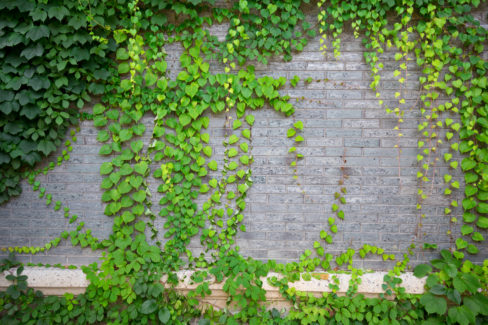
When we grow ivy in the garden, we usually focus on those gorgeous, trailing evergreen vines. Most of us don’t give the root system a second thought! However, how deep those roots go and how they grow can eventually lead to some side effects that are impossible to ignore.
How Deep Do the Feeder Roots Actually Go?
The “feeder roots” are what anchor the ivy to the ground and provide it with water and nutrients. Depending on how old the plant is and the soil conditions at its location, the depth can vary quite a bit:
- Young ivy stays shallow, rooting just below the surface.
- As the plant matures, the roots typically reach about 12 to 16 inches (30-40 cm) deep.
- In very dry soils, they can dive down as deep as 24 inches (60 cm) in search of moisture.
What This Means for Your Garden Care
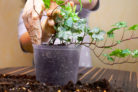
When you first plant new ivy in your garden, you’ll need to water it regularly for at least the first year. Since young plants pull water from the top layer of soil, they can dry out fast—especially during those scorching summer days. While older ivy is usually self-sufficient thanks to its deep roots, you should still give it a drink if you’re facing a weeks-long drought.
If you ever decide to remove ivy from your garden, you have to get every bit of the root system out. If you don’t, new shoots will just pop right back up. You’ll need to dig out those deep roots by hand with a spade. Unfortunately, there aren’t any remedies against ivy that effectively kill the entire root system underground. Even heavy-duty products like Roundup only really work on the leaves.
Aerial Roots: Mostly Surface-Level Clingers
There’s really no such thing as ivy without aerial roots. As soon as a vine hits a suitable surface, it sprouts tiny root strands known as aerial roots. These don’t actually “dig in” deep; they act more like little suction cups to hold the plant in place. This happens whether it’s climbing a fence, a tree, or a house wall. However, if you’re using ivy as a groundcover, those aerial roots can anchor into the dirt and eventually develop into deeper feeder roots.
Potential Problems with Aerial Roots
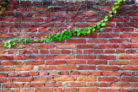
If you want to let ivy climb a wall or the side of your house, the surface should be slightly textured, but it absolutely must be free of cracks or damage. If there are gaps, those tiny roots will find their way inside, grow thicker, and eventually expand. This can turn a small crack into a major structural issue over time.
Pro Tip:
Always repair any damage to your walls before letting ivy climb them; this ensures the roots have nowhere to “dig in.” It’s also a good idea to regularly check any ivy-covered walls for new damage. If things start looking dicey, it might be time to get rid of the ivy and dispose of it properly.